strange Traditions
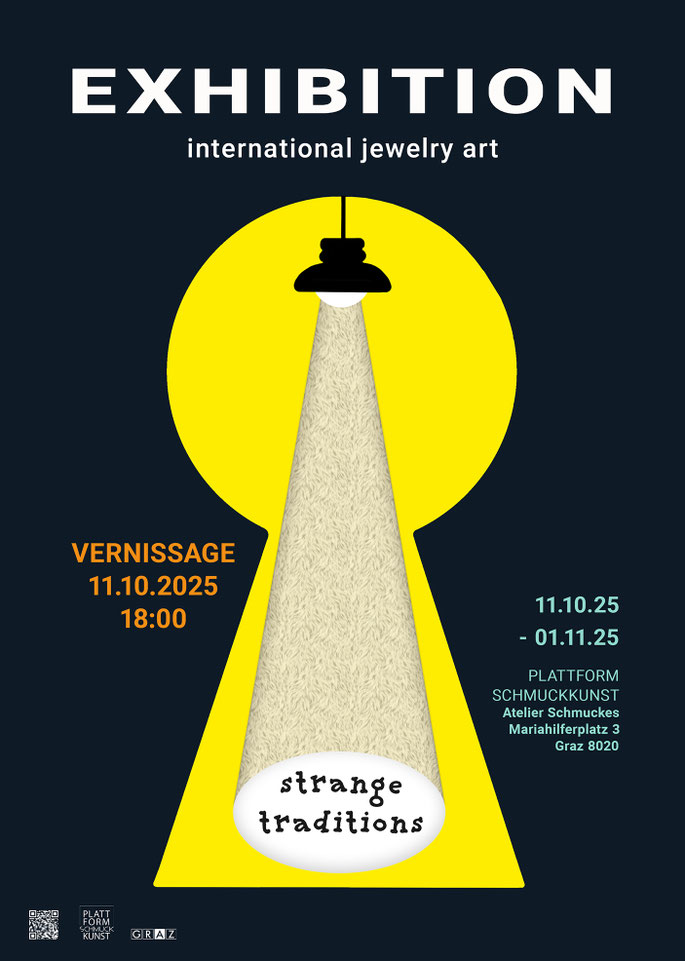

International group exhibition
contemporary jewelry art
The association Plattform Schmuckkunst is organising an international group exhibition for the fifth
time this year.
Under the title strange tradition, 19 selected works by international jewellery artists will be shown.
The opening will take place on Saturday 11.10.2025 from 6 p.m. in the premises of the Plattform Schmuckkunst association at Mariahilferplatz 3, 8020 Graz. On 12. October 2025 at 7 pm there will be a guided tour of the exhibition via Instagram livestream.
The exhibition can be visited on site from 11.10. - 01.11.2025.
This group exhibition highlights an international spectrum of traditons, both in a general and a personal context.
The term ‚strange‘ can be interpreted in a broad sense, encompassing not only what is foreign or unsettling, but also what is quirky, curious, extraordinary, or unconventional – depending on the
viewer’s perspective.
What may be considered normal to some can appear new, fascinating, frightening, or off-putting to others.
Through the individual approaches and social contextualisations of the artists, a diverse collection of works will be presented, offering personal insights and perspectives on the perception of traditions, customs, or rituals.
Impressions

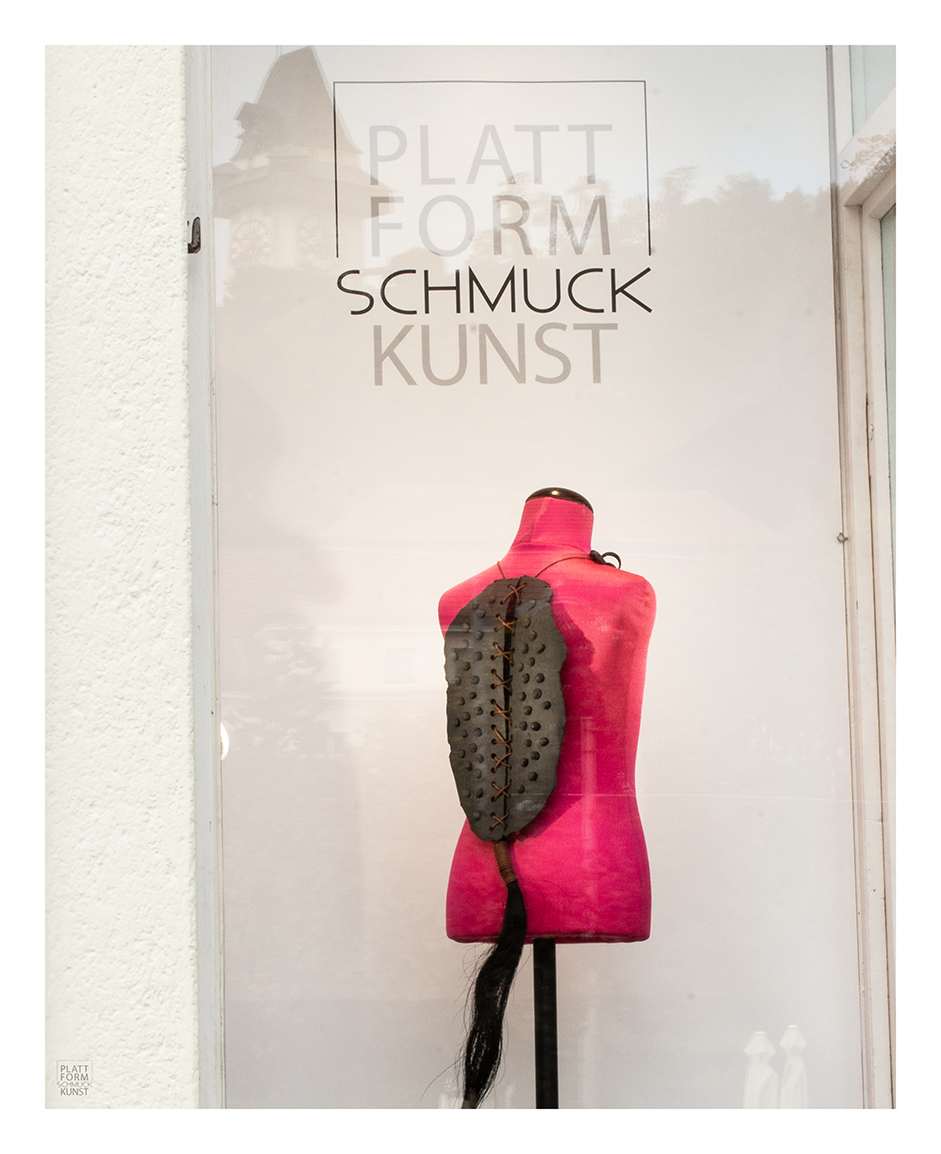

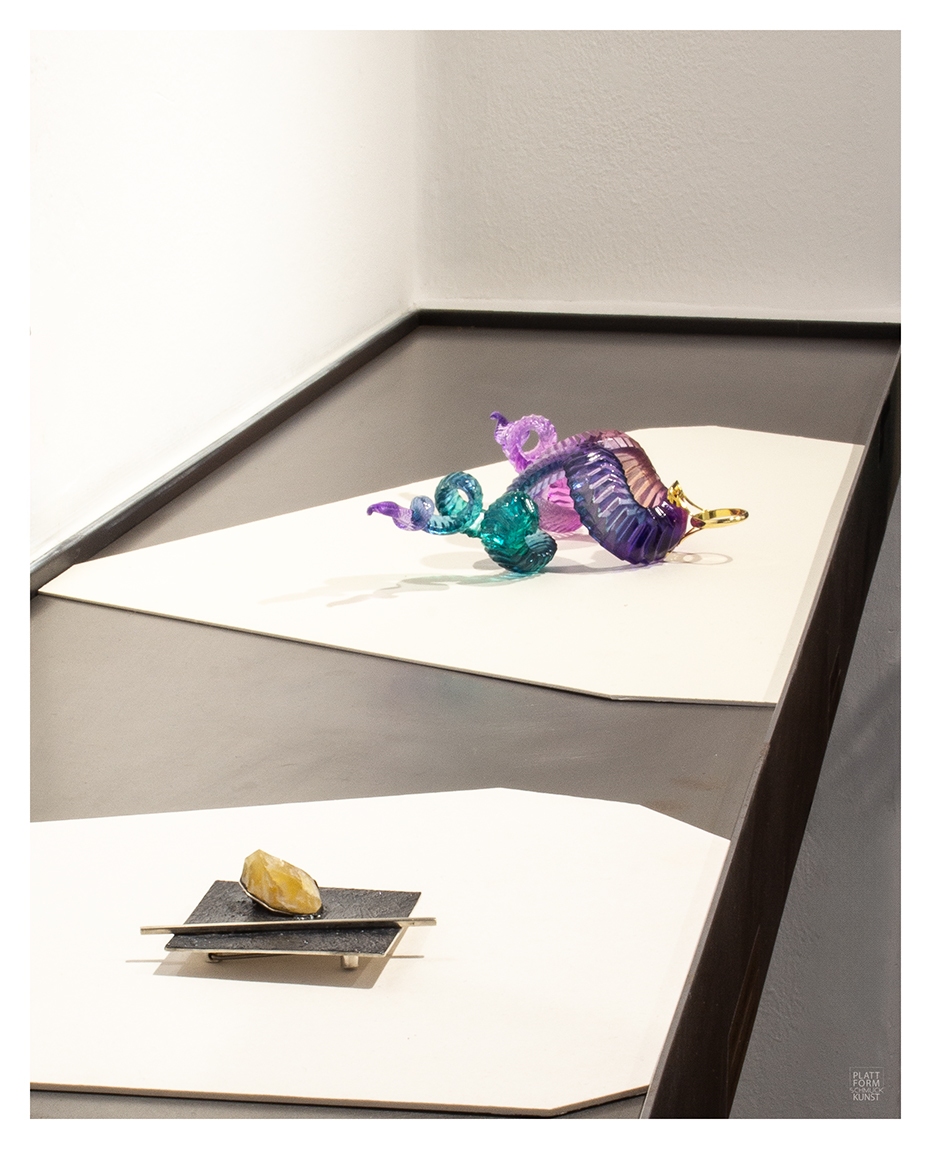

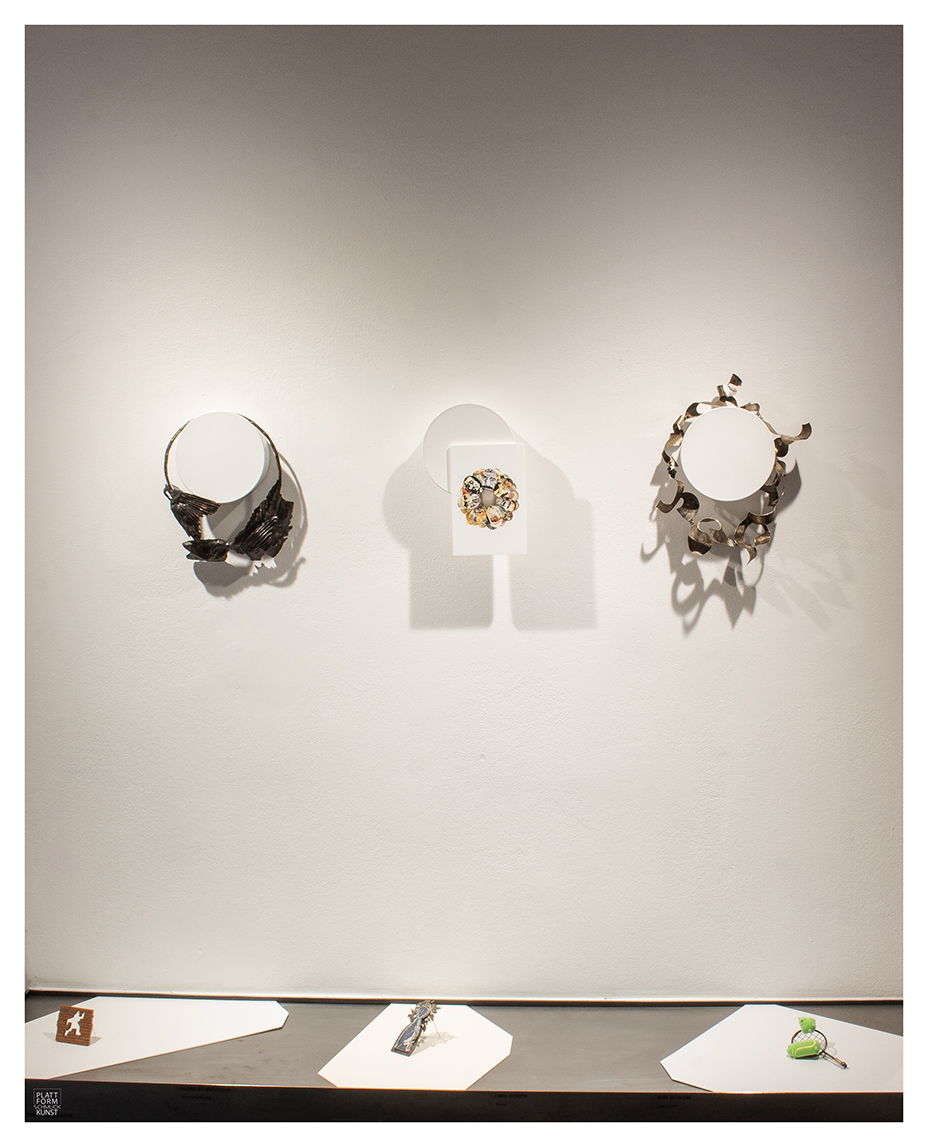
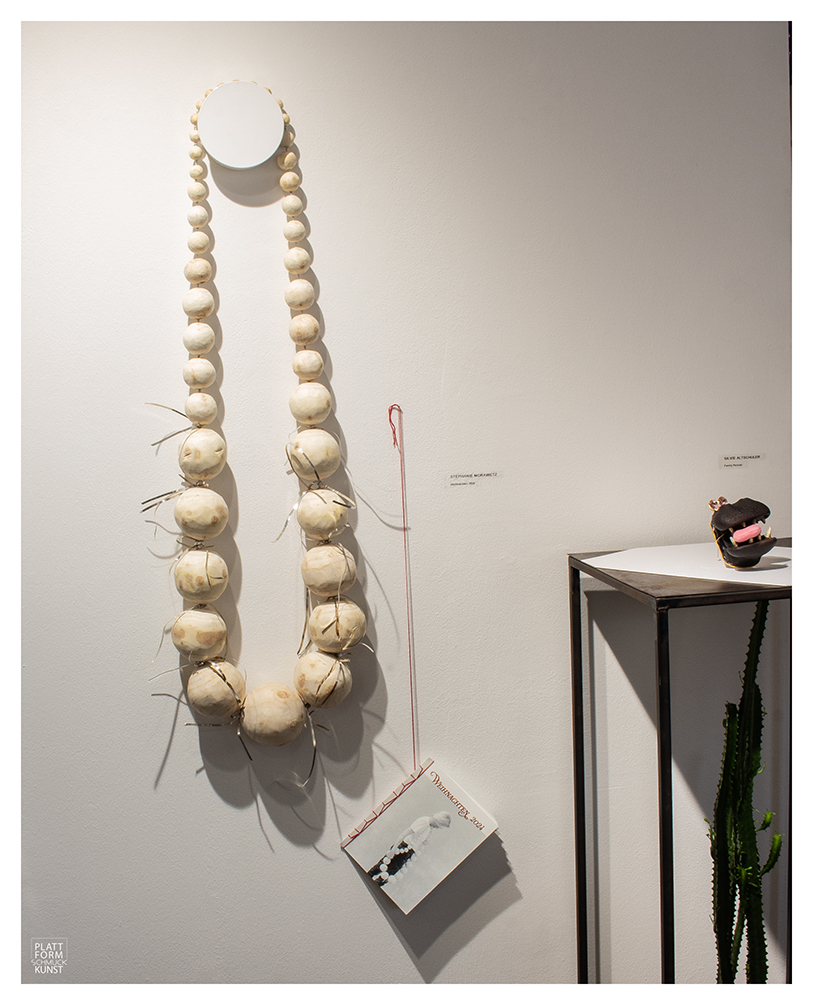
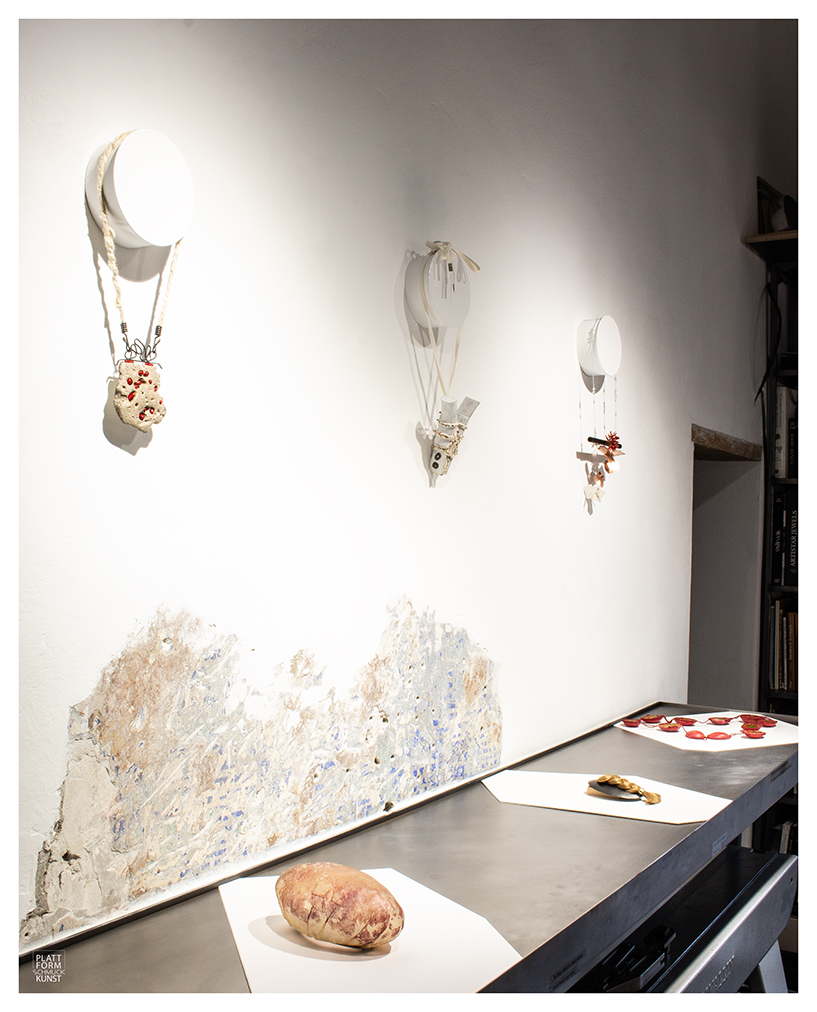
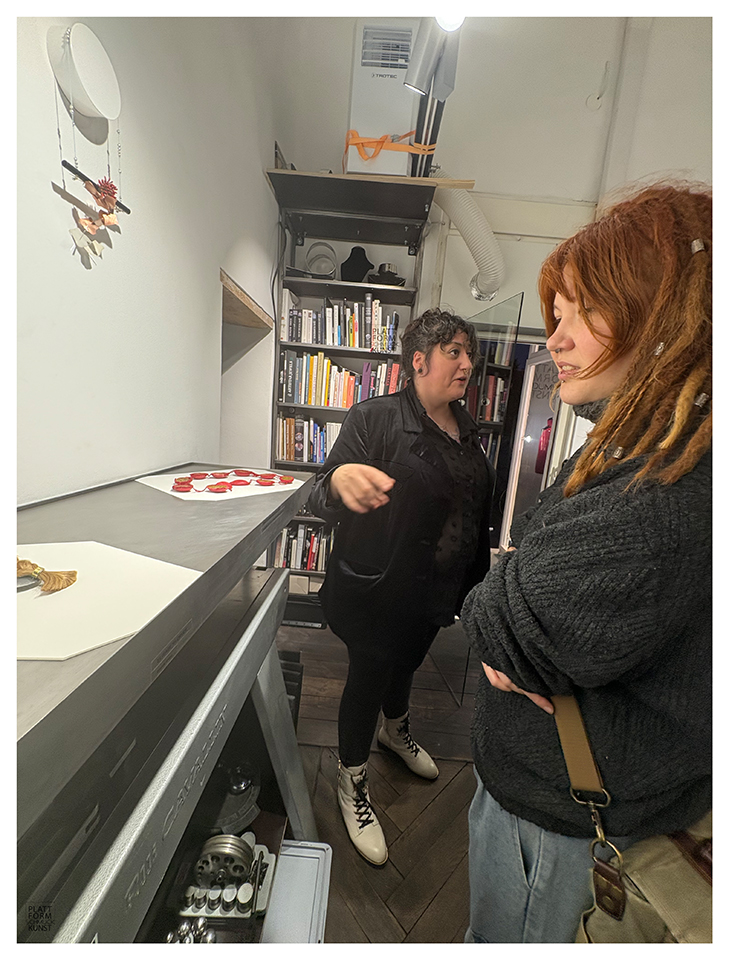

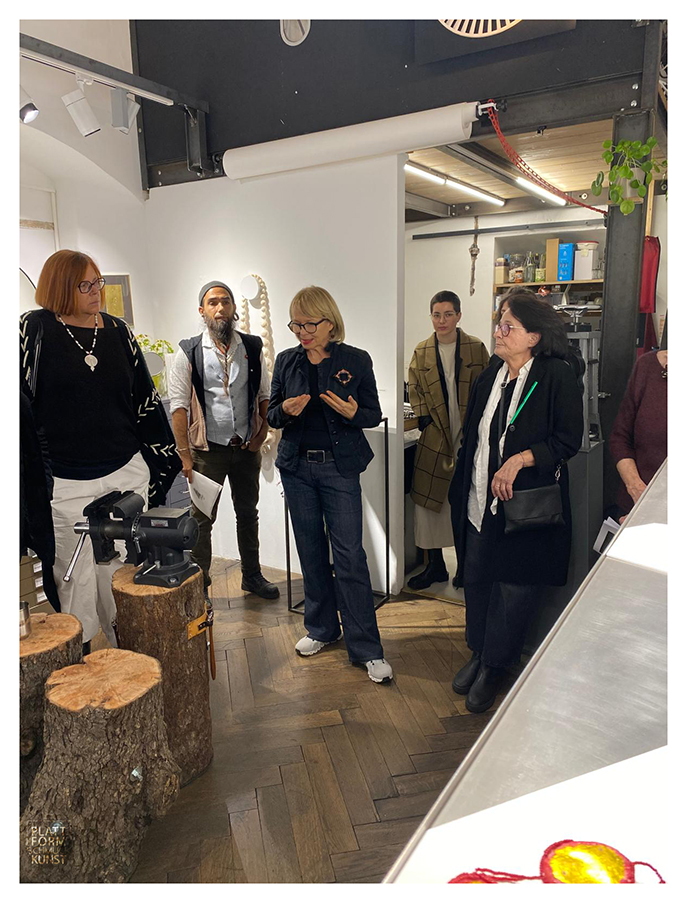
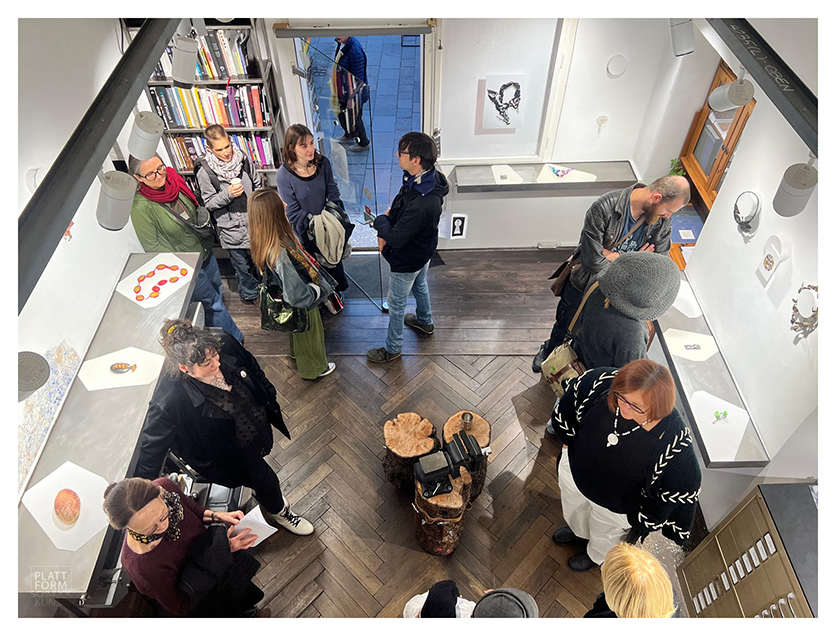


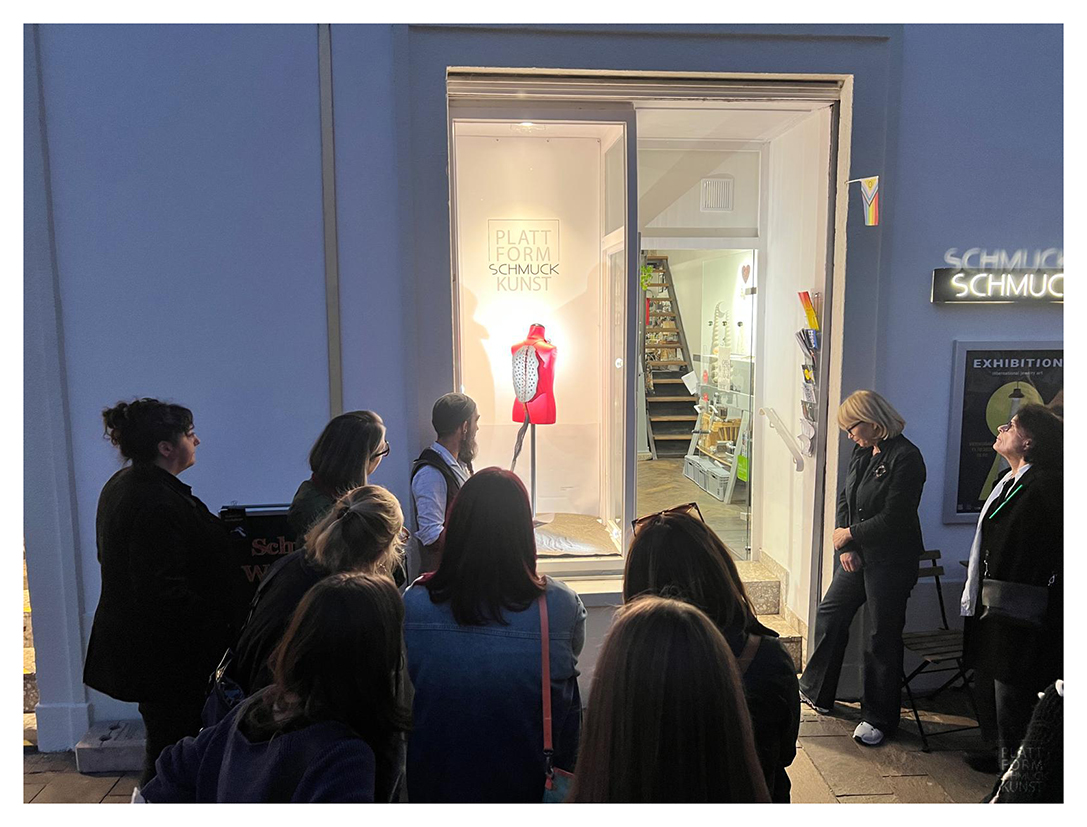


©Photos Noah Layr (watermark Plattform Schmuckkunst).
If unlabeled or otherwise labeled - All rights are reserved by the respective owner.
Artists
Alena Štukavcová / CZE
A part of Dunkirk‘s festival, a crowd gathers before the town hall, chanting „Herrings, freedom for the herrings!“
The mayor tosses herrings out, and the crowd cheers.
This necklace captures that flying, battered old herring who‘s been „flying“ for decades - tattered, grimy, and worn.
Crafted in copper using the repousse technique, with a silver dust finish and patina.
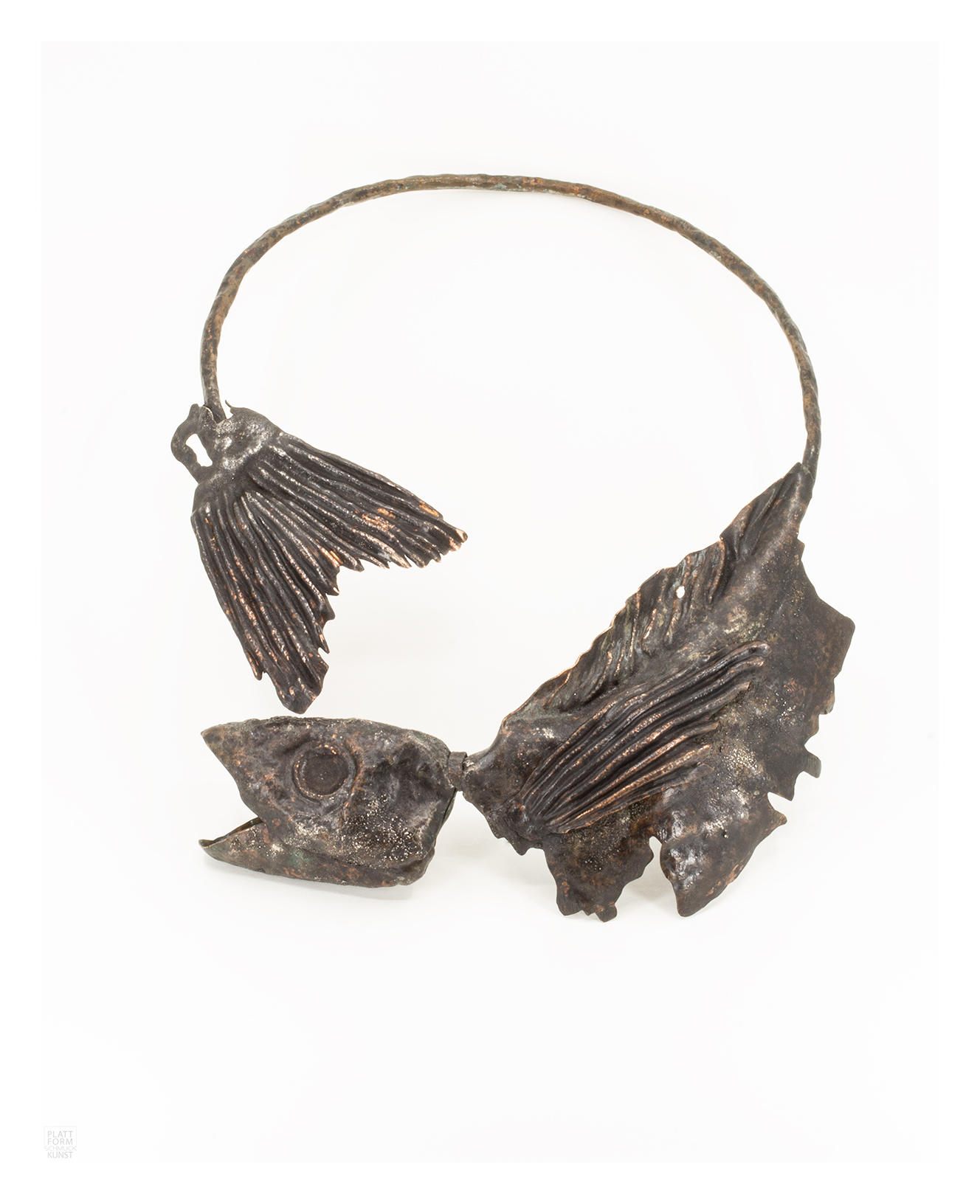

The Flying Herring
neckjewellery
copper, silver, wax
Bibi Klekachkoska / AT
In 1992, it was discovered that our brains have specific cells, called mirror neurons.
These help us understand the thoughts, feelings, and intentions of others by simulating their experiences in our own brain.
Mirror neurons play a key role in empathy, as they enable us to feel what others feel and sympathize
with their emotions.
Empathy is the substrate for growing relationships, building connections.
It is inclusive of all life.
It is our technology to extend our central nervous system viscerally as a family of planet Earth. The strange becomes familial.

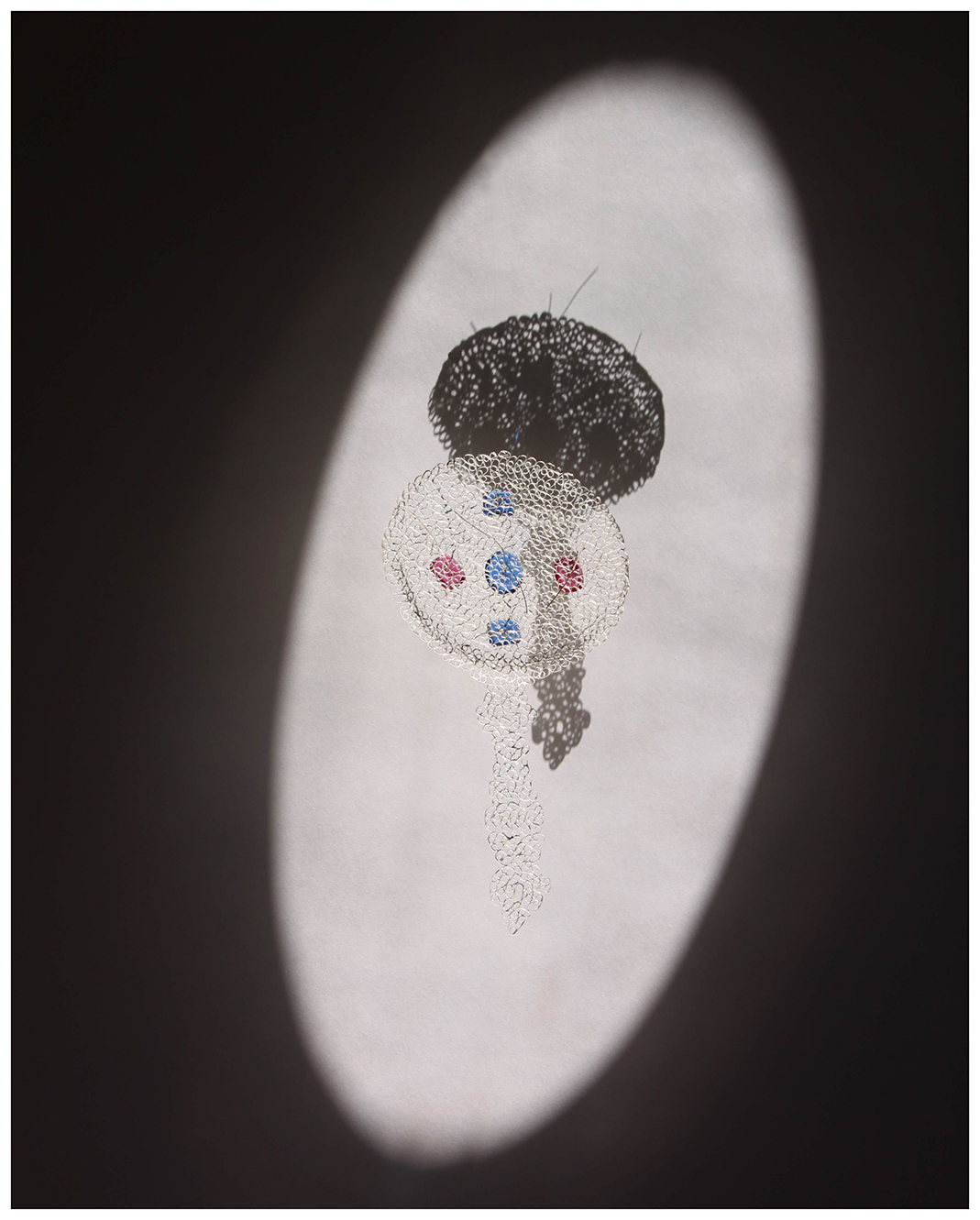


©Bibi Klekachkoska
I See You
pendant/mirror
silver 980, gold 585, man-made spinel, thread
Brigitte Haubenhofer-Salicites / AT
This neckjewellery presents a fractally dissolved body on the cross, evoking Pilate’s unanswered question: What is truth?
The fractal form reflects the fragmentation and impossibility of definitive answers - truth dissolves into ambiguity.
Thus, the work reflects a tradition of thought that conceives of truth as disturbing, elusive, and never fully attainable. In an age of “alternative facts” and algorithmically filtered realities, the piece points to the necessity of enduring uncertainty rather than resolving it.
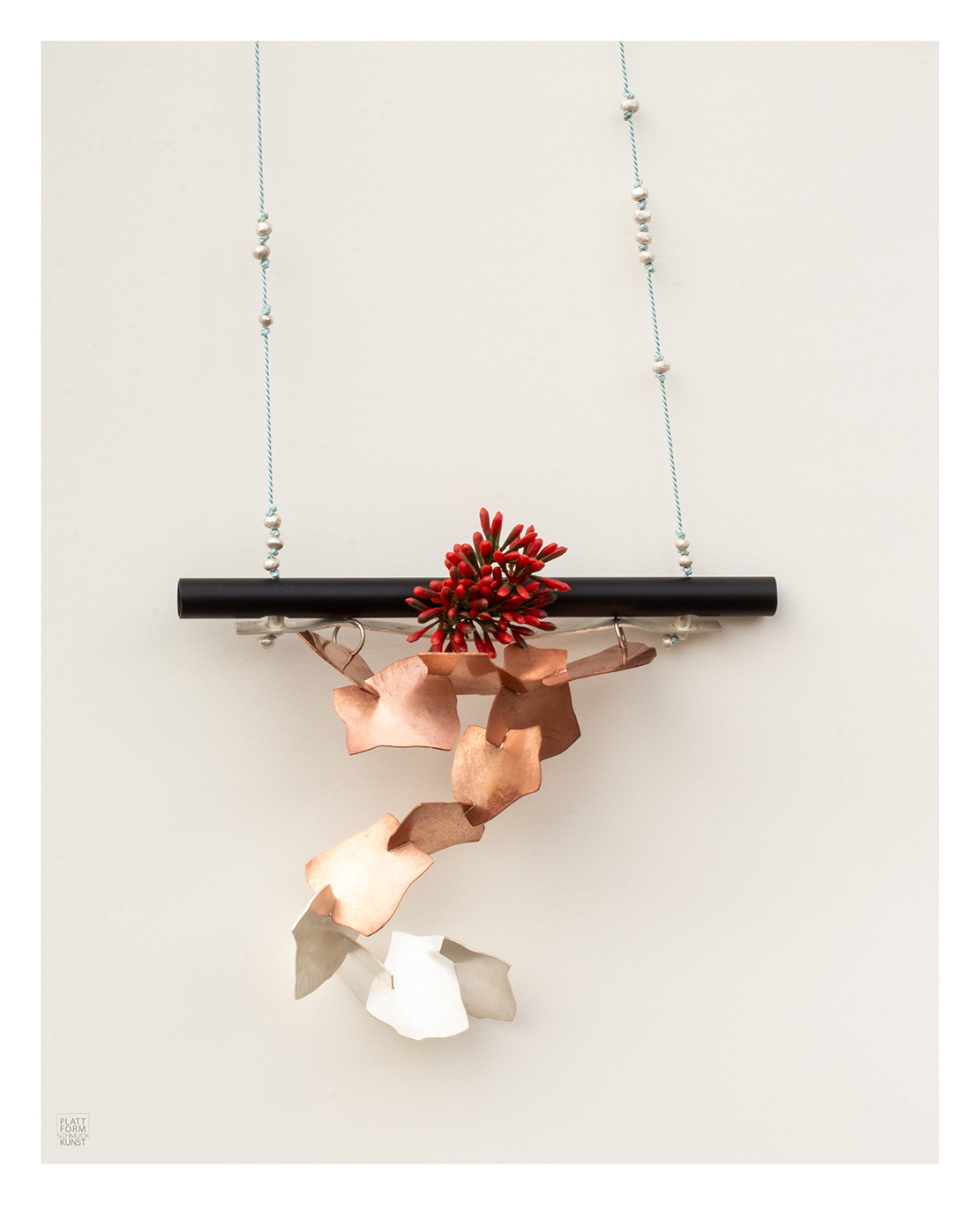
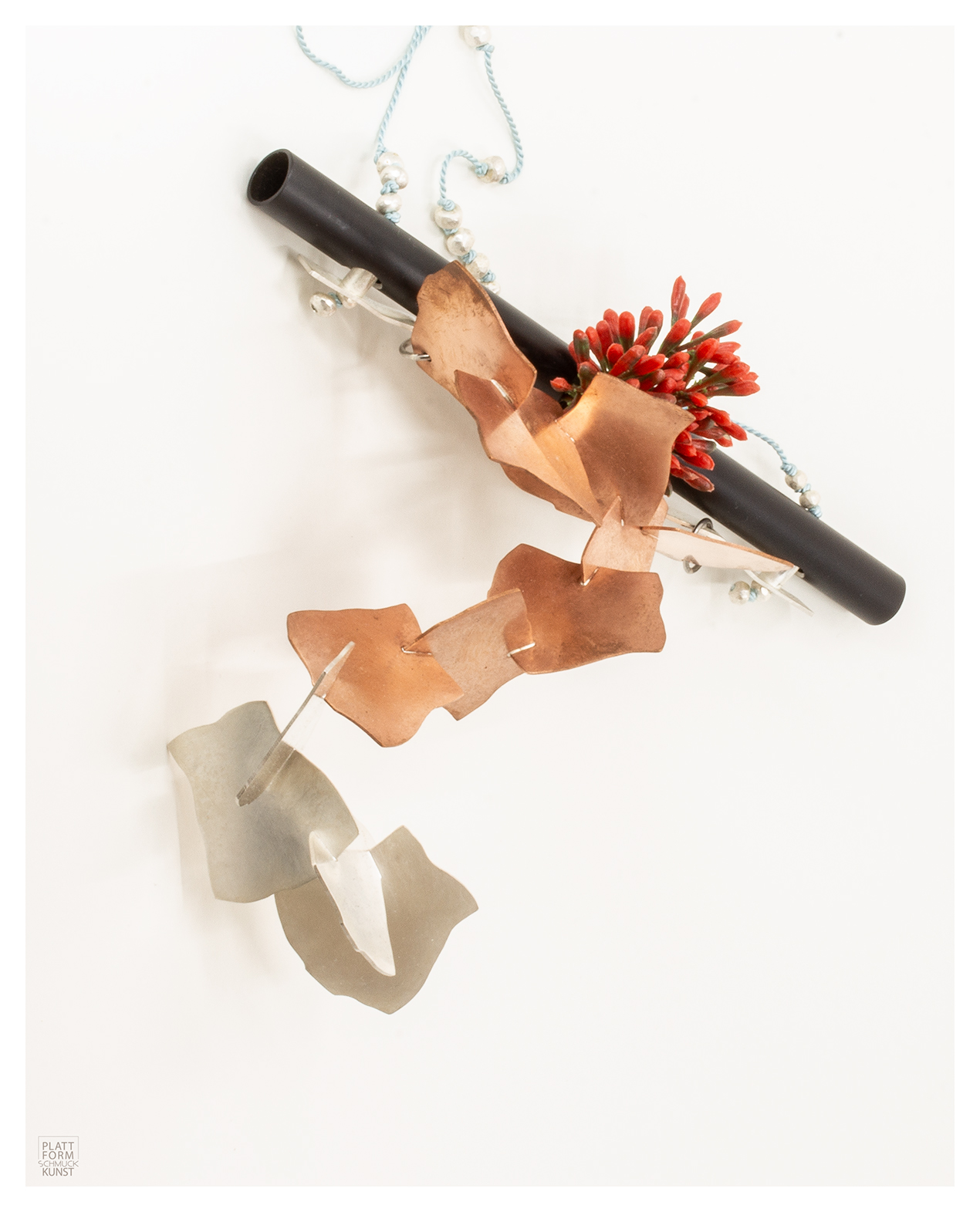


Fractal Body on the Cross - or Annuschka has already spilled the oil
neckjewellery
copper, silver, aluminum, plastic
Daye Kim / UK
Sibling relationships are among the earliest human bonds, shaping social interaction and exerting deep influence.
They embody both intimacy and rivalry: cooperation can foster dependence, while competition and inferiority may arise from shared resources or parental attention.
Love, conflict, support, and negative emotions coexist, making these ties emotionally complex and often contradictory.
My artwork explores this ambiguity by drawing on Portrait of Gabrielle d’Estrées and her sister, transforming a simple form into evolving, divergent shapes.
This visual process symbolises the layered, intertwined emotions of sibling bonds, inviting reflection on their multifaceted and paradoxical nature.
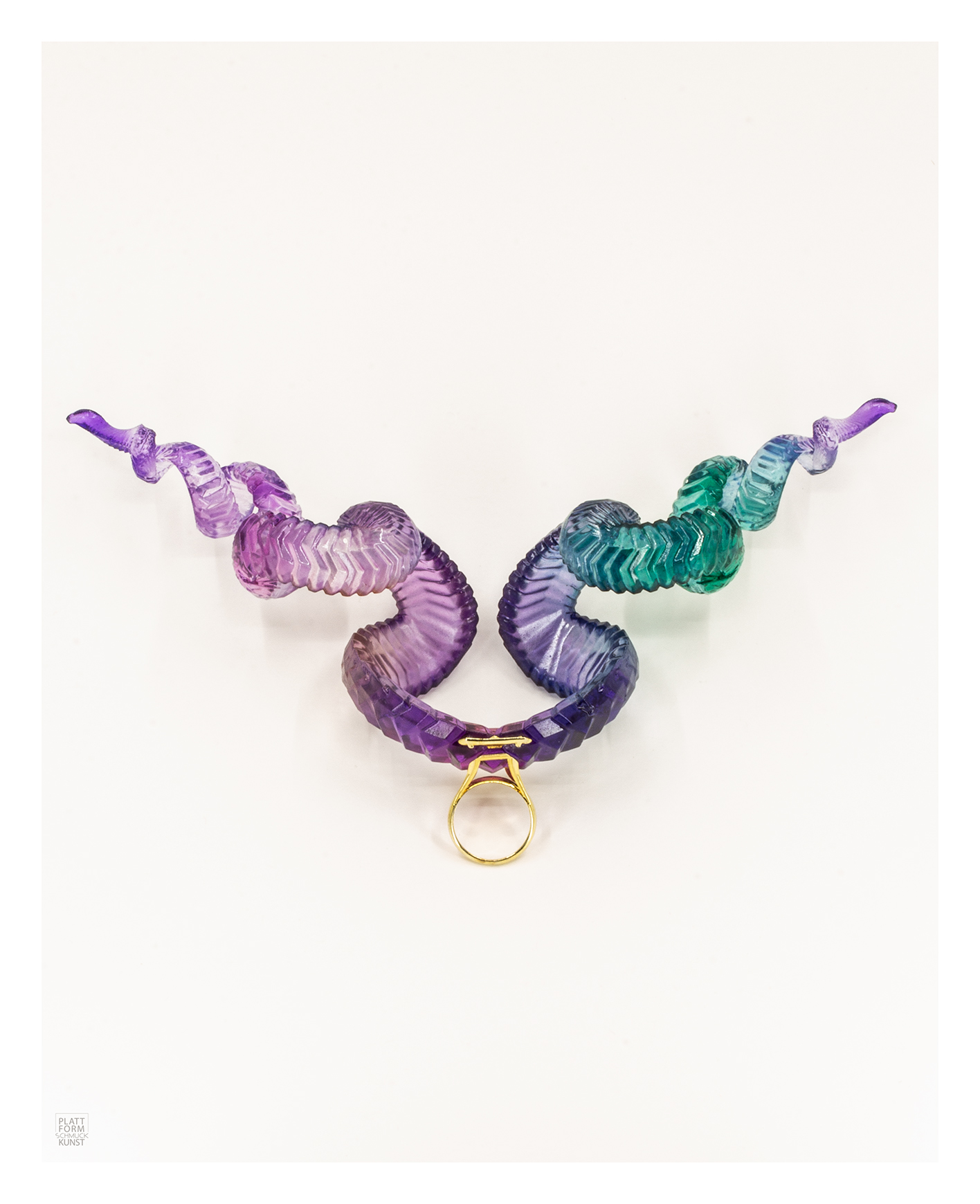
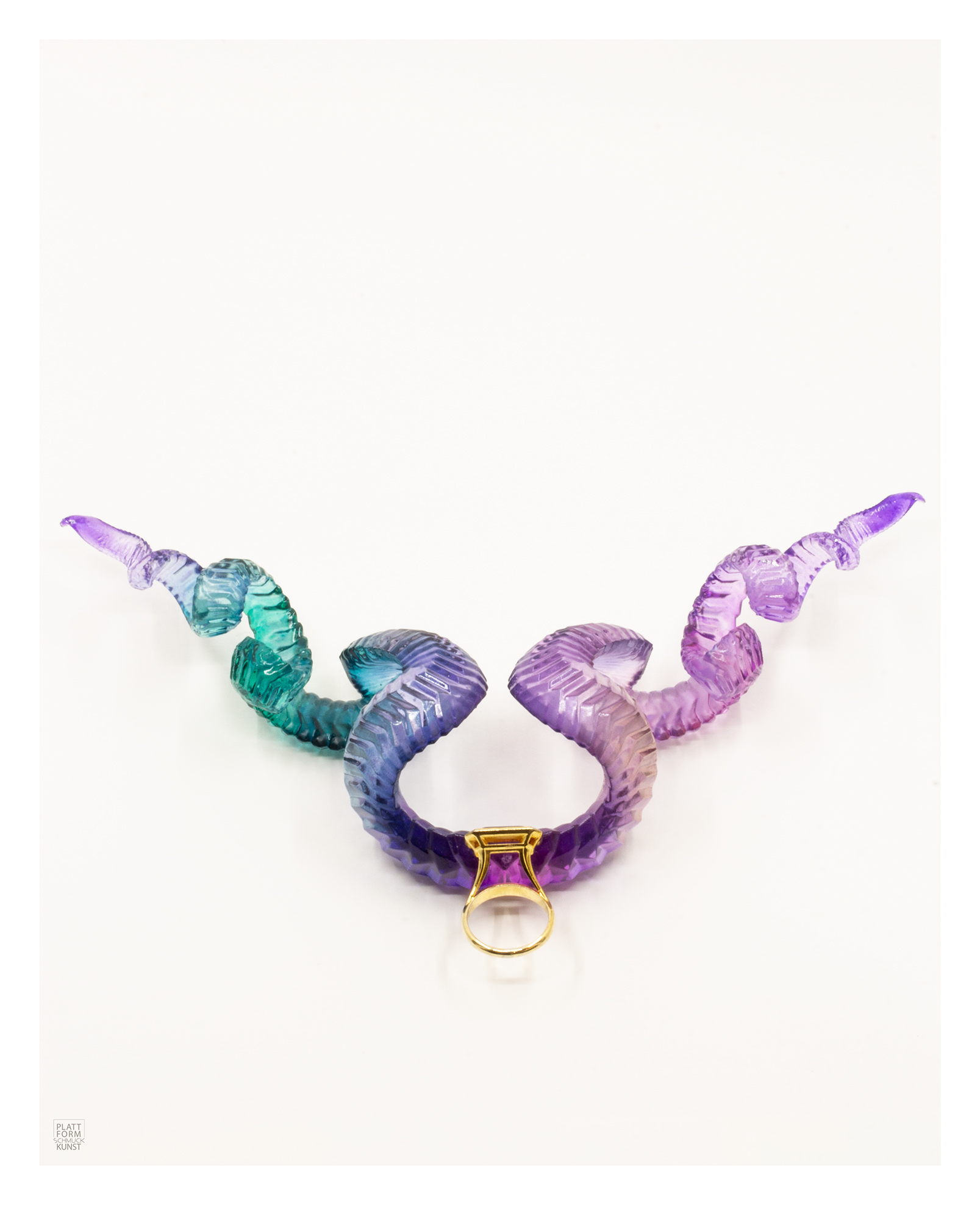


This relationship is
ring
bronze with 18k gold plating, clear resin
donidelmare / Emily De Vito, Roberto Coppola / IT
Picasso‘s works were strange in his time. Women/women or man/man kisses were strange, fortunately much less so now.
A banana and bacon sandwich was strange, but Elvis Presley loved it.
Anomalous combinations always had problems at the beginning, but then they didn‘t: you could say that the world evolves also thanks to strange things.
Our work is also based on anomalous combinations.
We always start from a fragment collected on the beach and combine it with other unrelated materials to achieve new balances, new beauty, new life.
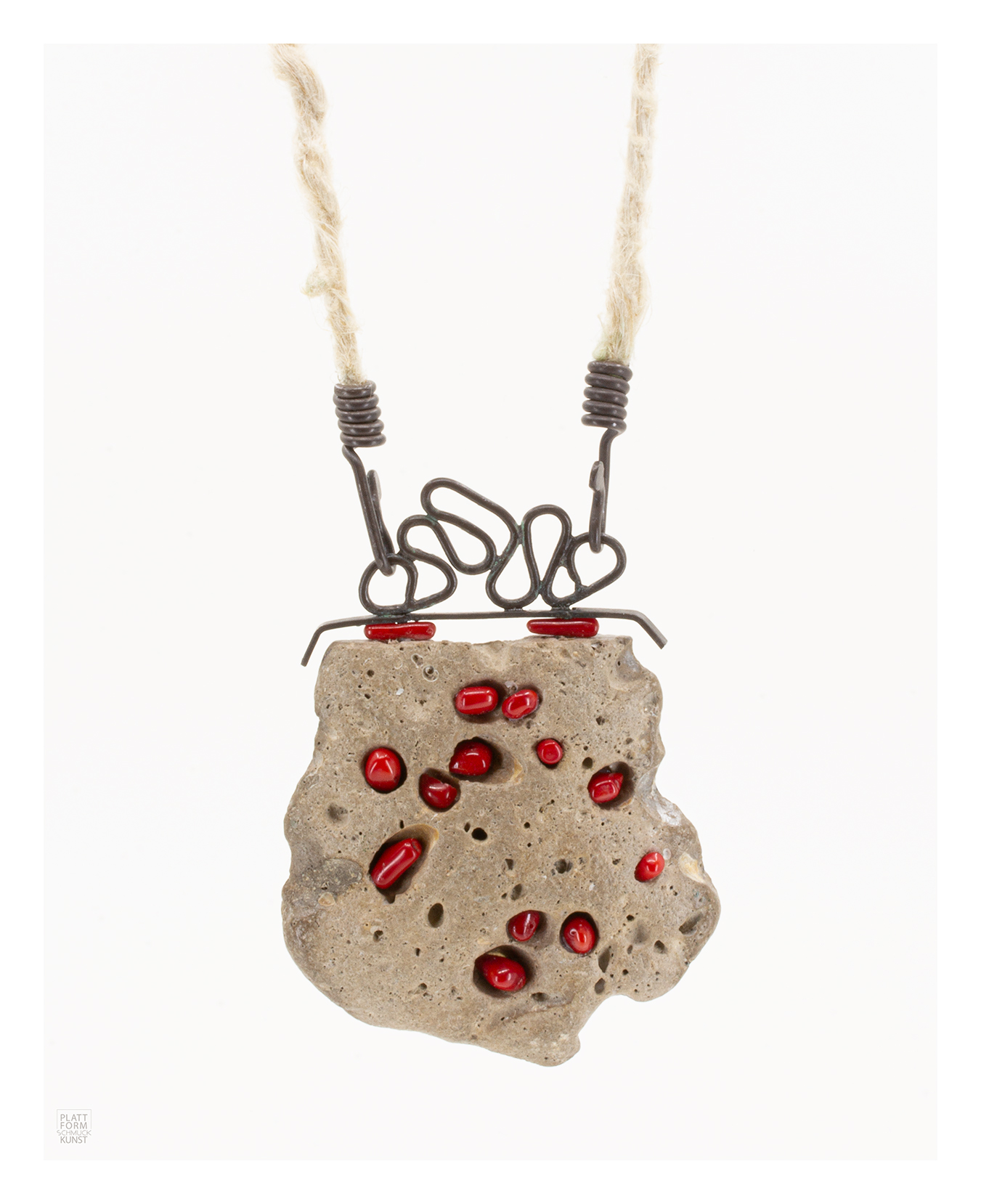

new red colony
neckjewellery
stone fragment collected on the beach, coral, oxidized silver, recycled rope
Elisabeth Drude / AT
Even in the Baroque period, animal or human hair was used for jewelry, but hair jewelry truly flourished during the Biedermeier era from 1820 onward.
Hair from both living and deceased individuals was used.
On the one hand, such jewelry served as a means of commemorating the dead: strands of hair were bobbin-laced, braided, and crafted into chains or earrings, which were worn as relics long after the mourning period.
On the other hand, hair jewelry was regarded as an expression of deep affection.
For instance, people would have jewelry made from their own hair and give it to a beloved person as a gift.
My braided hair brooch, made with my niece’s hair, continues this tradition and symbolizes an “braided bond” with her.
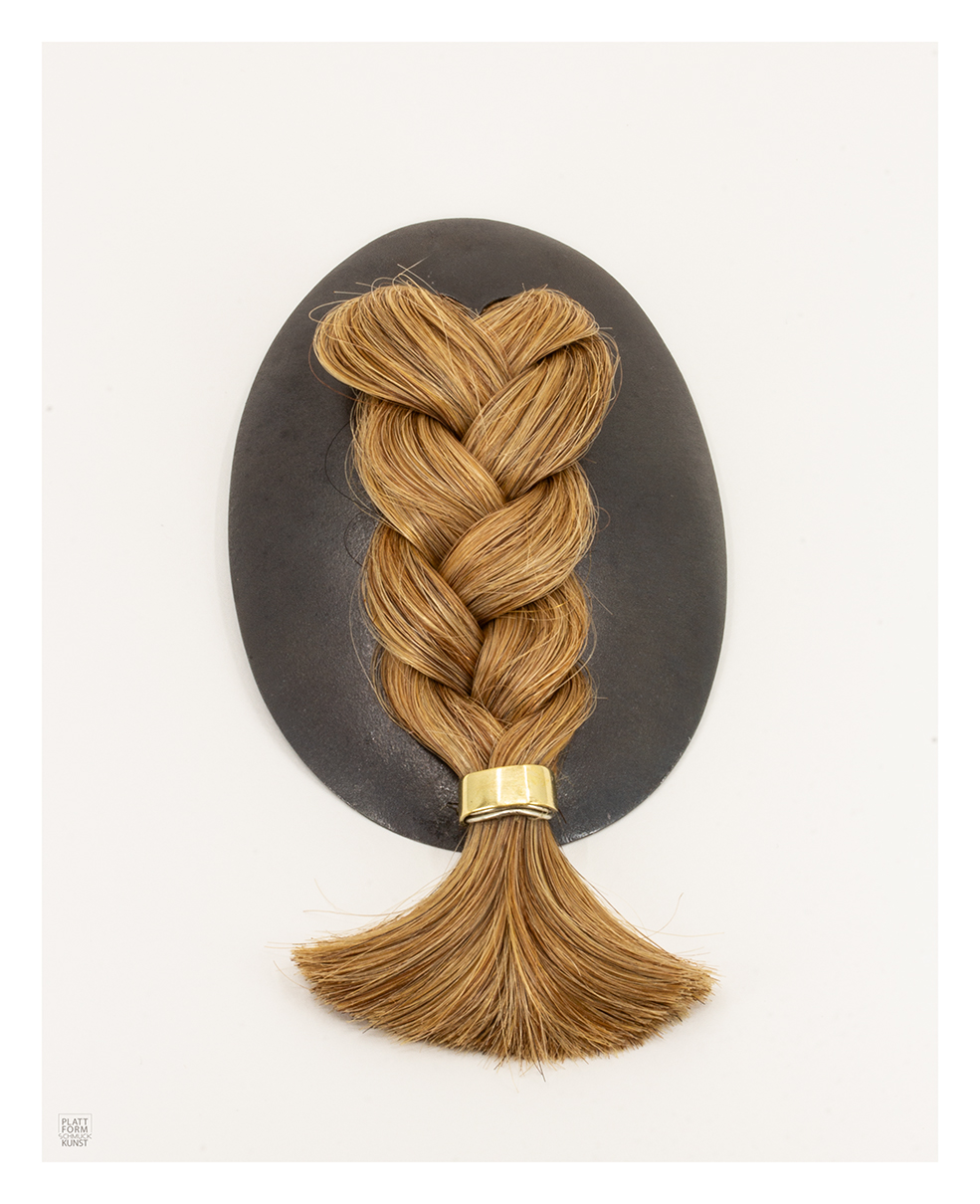
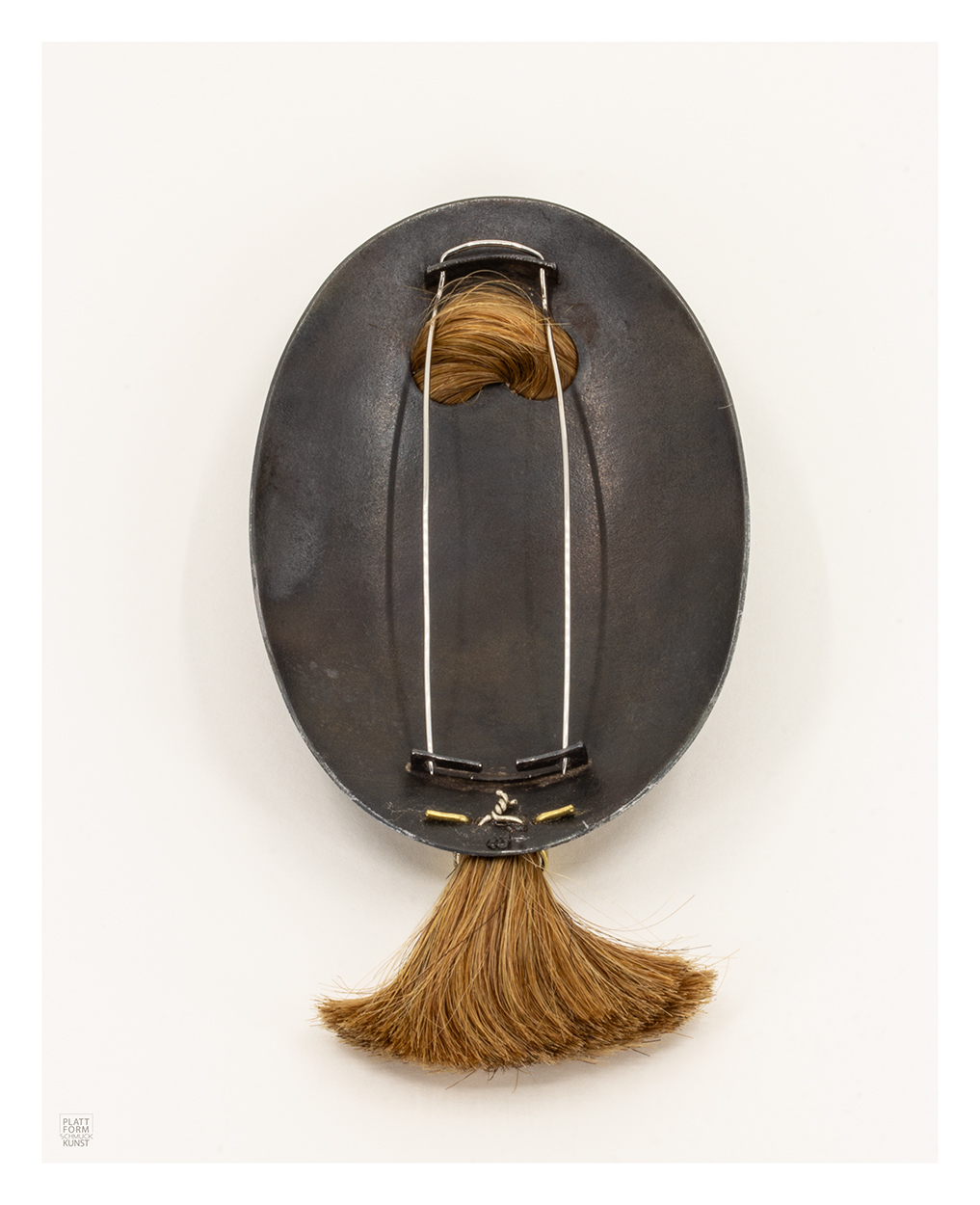


Blonde today
brooch
iron and hair
Flora Anaïs Lingenhel / CH
“Achetringele” is a New Year’s ritual from the Swiss Alpine village of Laupen.
During the ritual, young men wear carved wooden masks and carry inflated cow bladders, sticks, and bells as they roam the streets, chasing away evil spirits.
Today, due to a lack of participants, girls are also allowed to join.
The ritual ends with boys hitting girls they find attractive - a socially accepted display of affection through violence.
This brooch, shaped like a cow bladder and made from one, aims to criticize the normalization of violence against women embedded in this tradition by exposing its underlying aggression.
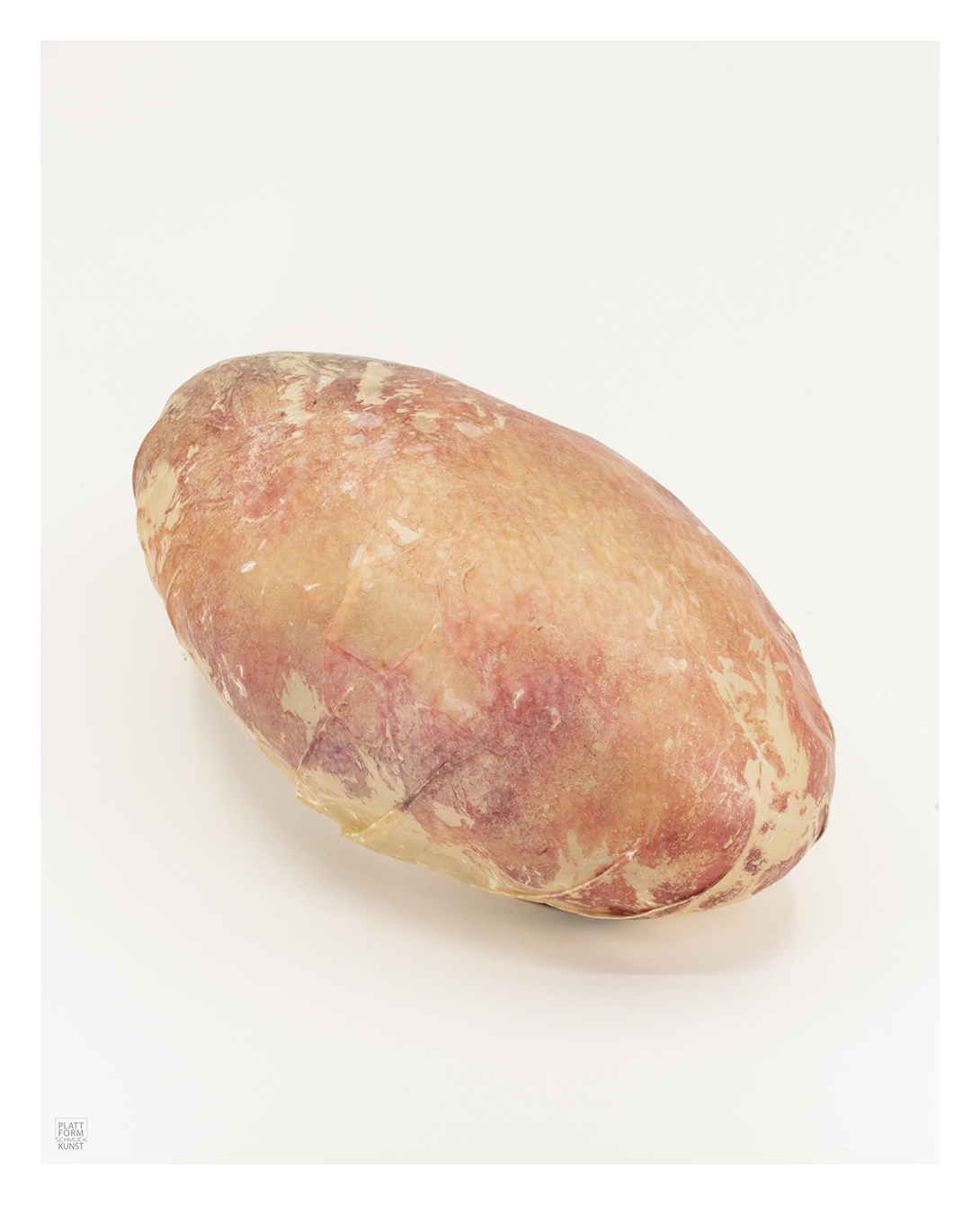

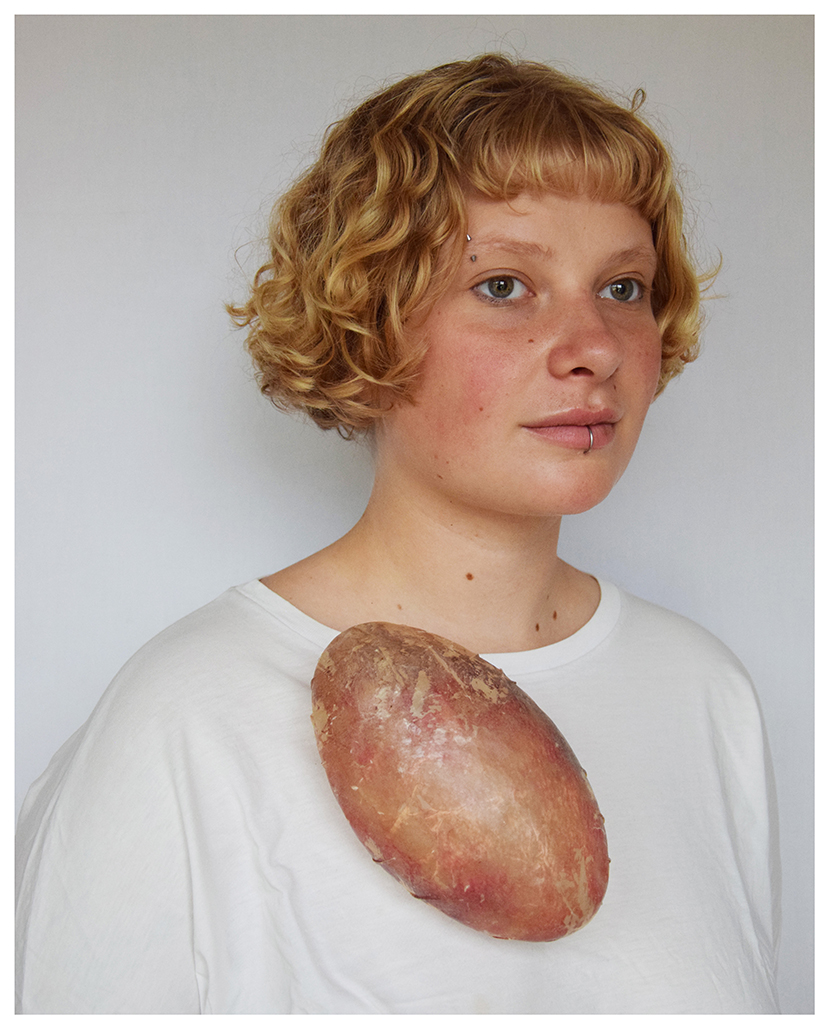


©Flora Anaïs Lingenhel
Acheschlah (to beat down)
brooch
cow bladder, iron and cord
Johanna Törnqvist / SWE
A small flutter of a wing on one side of the globe can cause major turbulence on the other.
Everything is in motion and nothing stands still.
So every cause has its effect. And every effect has its affects.
Traditions have never been traditional, they too are in a state of constant change.
As are our believes. Over time changing, in flux with the events of time.
Everything is in a flow, changing and moving us forward toward new, remarkable ways.
Strange ways.
Ways where chaos lives next door to the divine.
BUTTERFLY EFFECTS
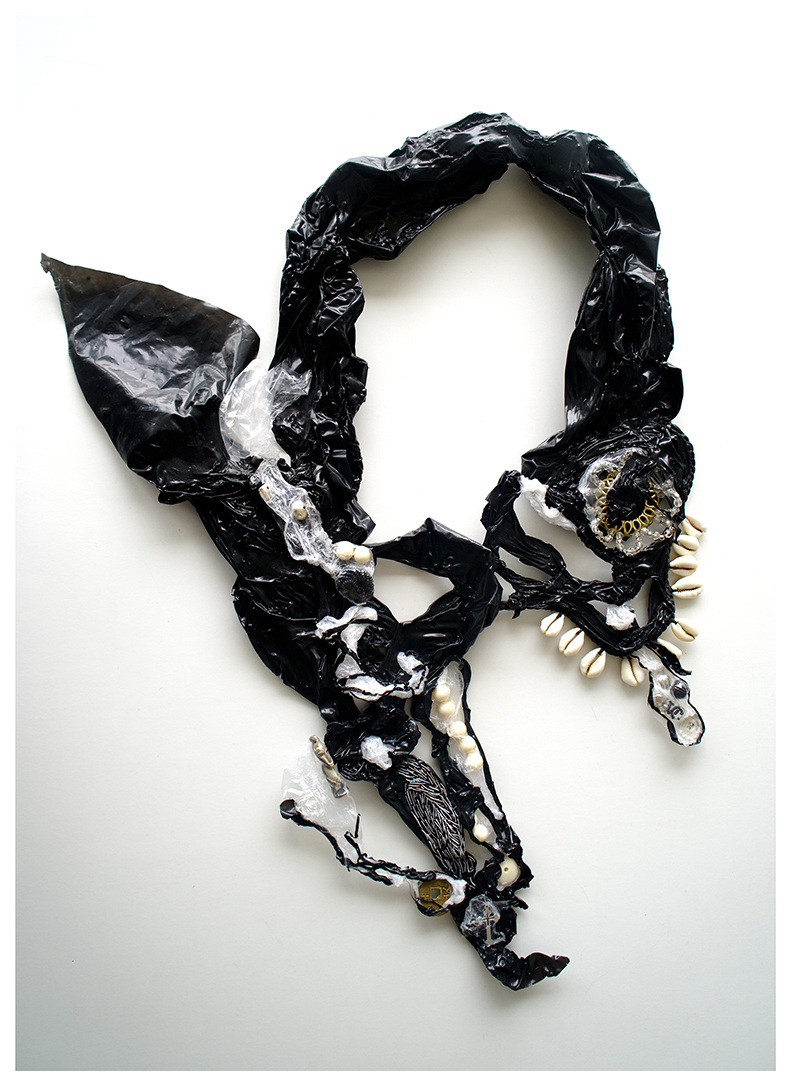

©Johanna Törnqvist
Butterfly Effects
neckjewellery
recycled plastic and custom jewelry
Karin van Paassen / Nl
A porcelain corset that fastens at the back embodies both confinement and pain.
The hardness of the material emphasises the vulnerability of the body and evokes a feeling of oppression. At the same time, the choice of the back and porcelain is alienating and unexpected: an unconventional combination that disrupts the familiar and creates space for new interpretations. It forces us to think and, paradoxically, also has a liberating effect – because it shows that the impossible or unthinkable can indeed exist, every part of the corset is handmade.
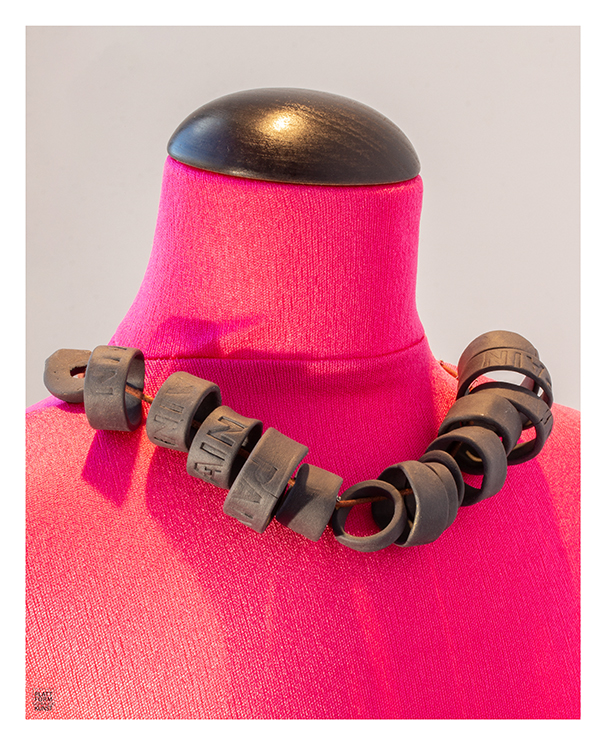
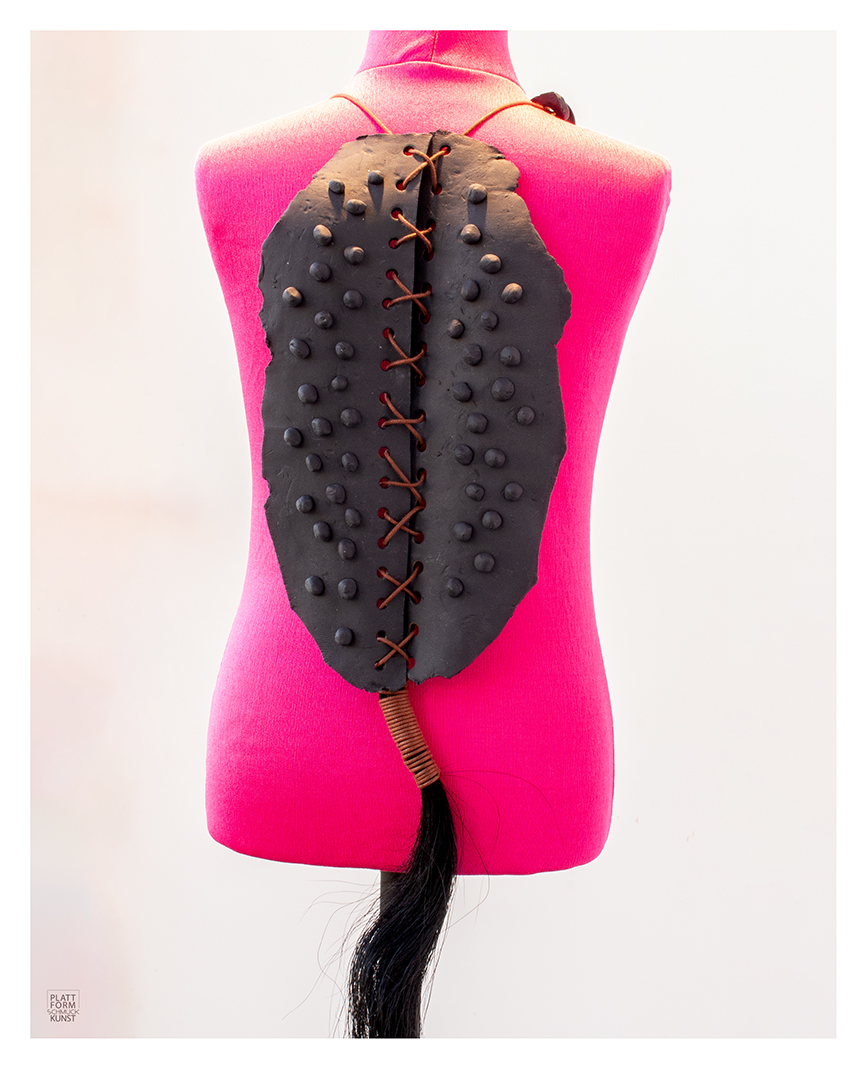


tightness
backjewellery
black porcelain, horsehair, leather
Martina Obid Mlakar / SLO
The word strange often signals discomfort, unfamiliarity, or something that does not feel quite right.
In ”I want to break free“ that strangeness comes from being trapped - by lies, expectations, or (emotional) walls.
The desire to break free is a powerful push toward truth, authenticity, and liberation from what no longer fits.
Breaking free is a powerful metaphor for growth, courage and the pursuit of truth.
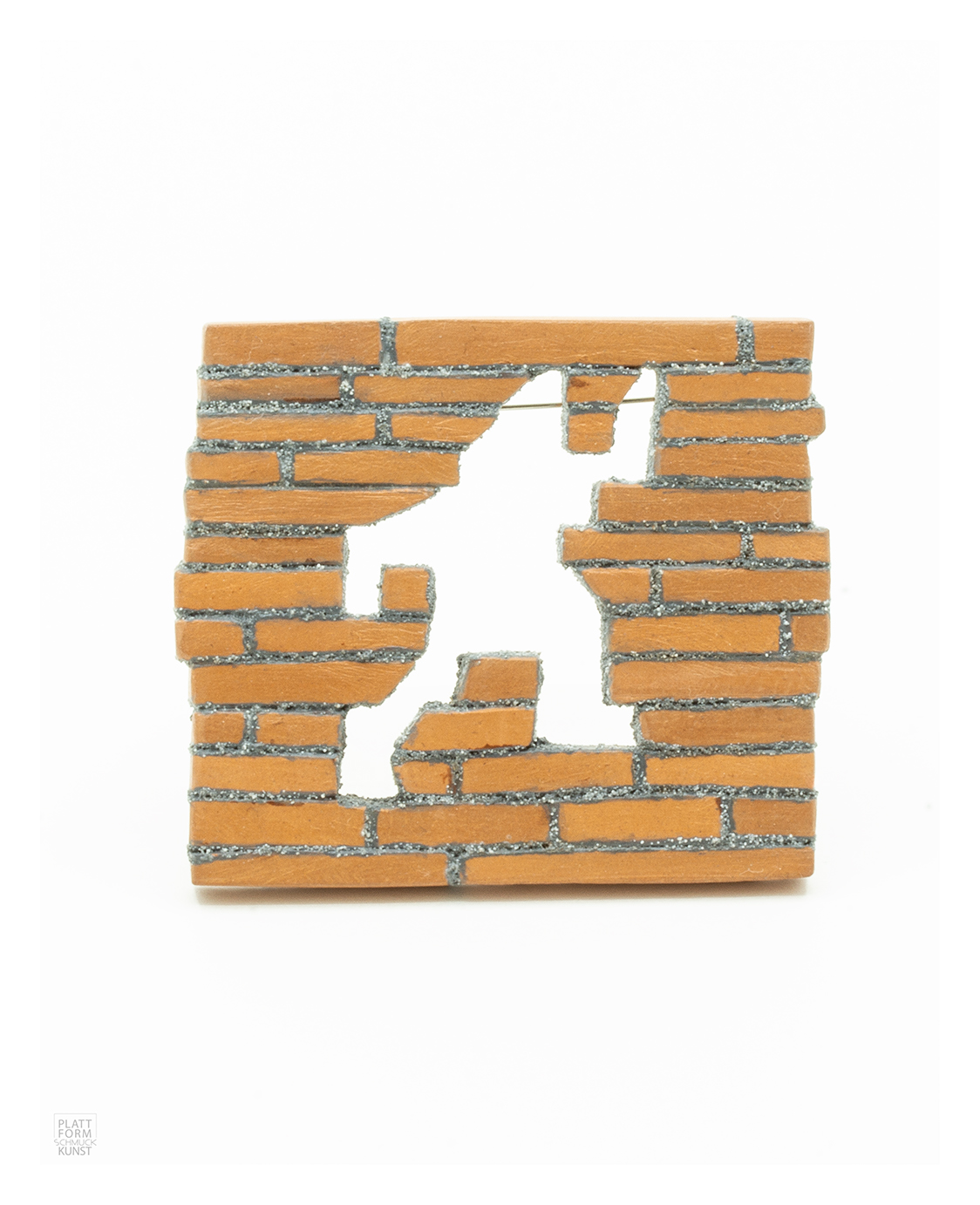
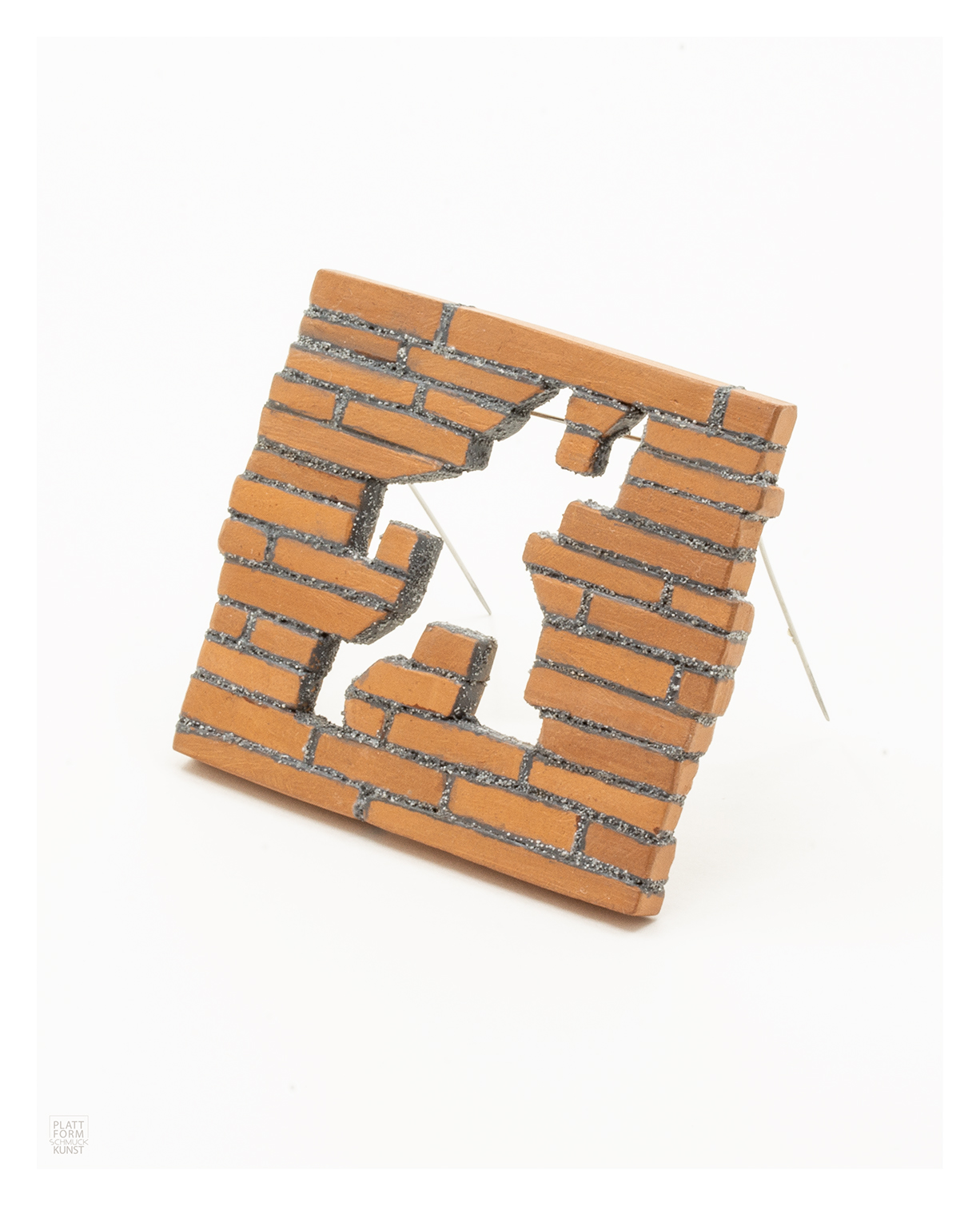


I want to break free
brooch
bricks, silver 925, acryl
Miri Shalom / UK
Sticks and stones will break my bones but names will never hurt me.”
This was a mantra that I was raised with in my childhood, but only later on in life did I learn it was a fallacy.
Words may serve as powerful conduits, linking us to others and our inner selves, influencing our subconscious, and guiding our every action.
They possess the ability to metaphorically „cast a spell.“
These pieces of jewelry intricately weave together the spiritual essence of Hebrew letters, creating a unique and mystical accessory that goes beyond mere adornment.
Each letter, carries its own sacred tradition, becoming a conduit for spiritual energy and a tangible reminder of the metaphysical connection between language and spirituality.
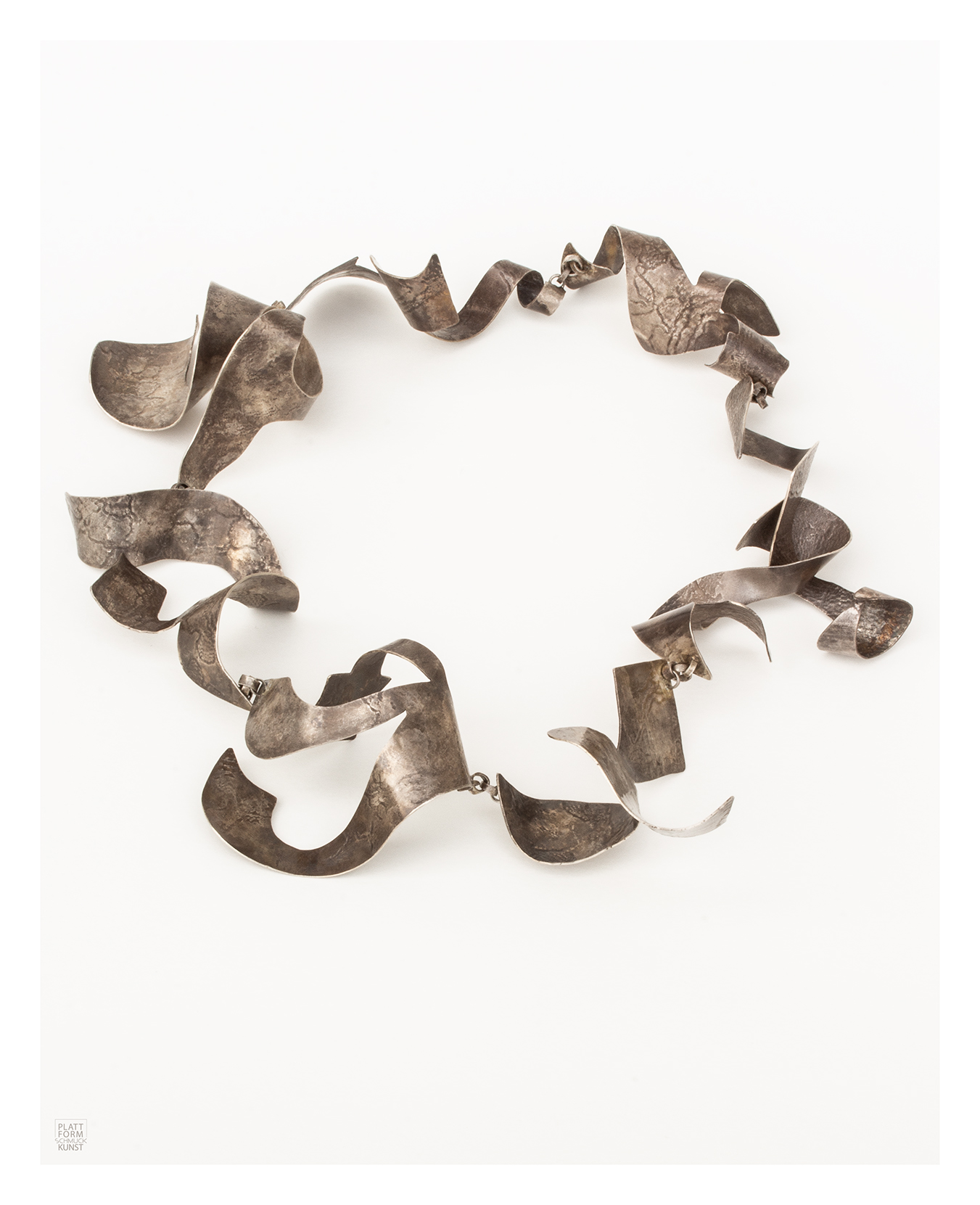
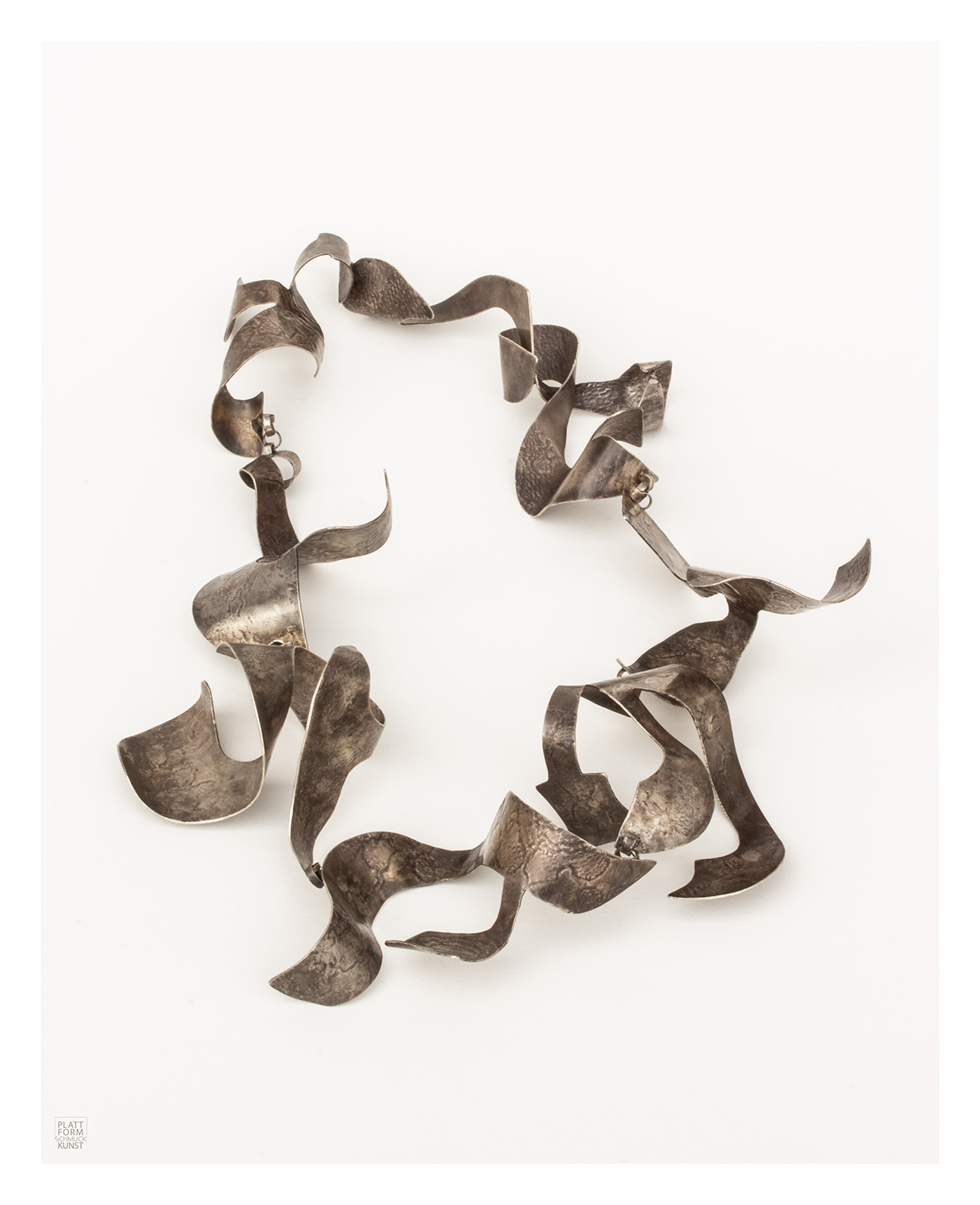


Cast a spell
neckjewellery
silver 925
Omri Goren / ISR
The brooch incorporates portraits of men taken from paintings by the painter Michael Shlomoviz - my grandfather.
These tough-looking, and sometimes hard-working men, are repositioned on the body in a seductive dance of sorts - a search for changing identities in an age of closeness and distance.
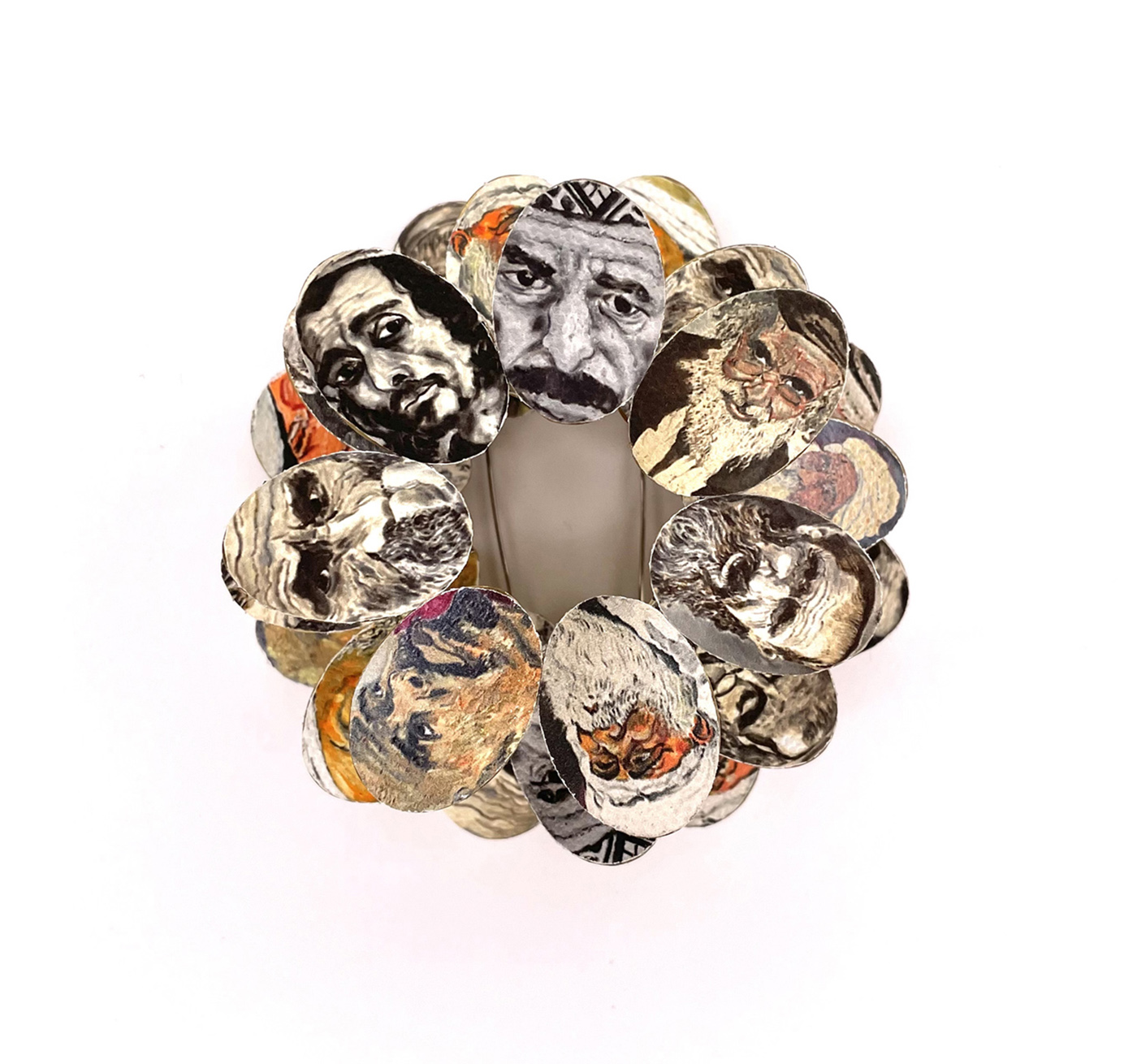
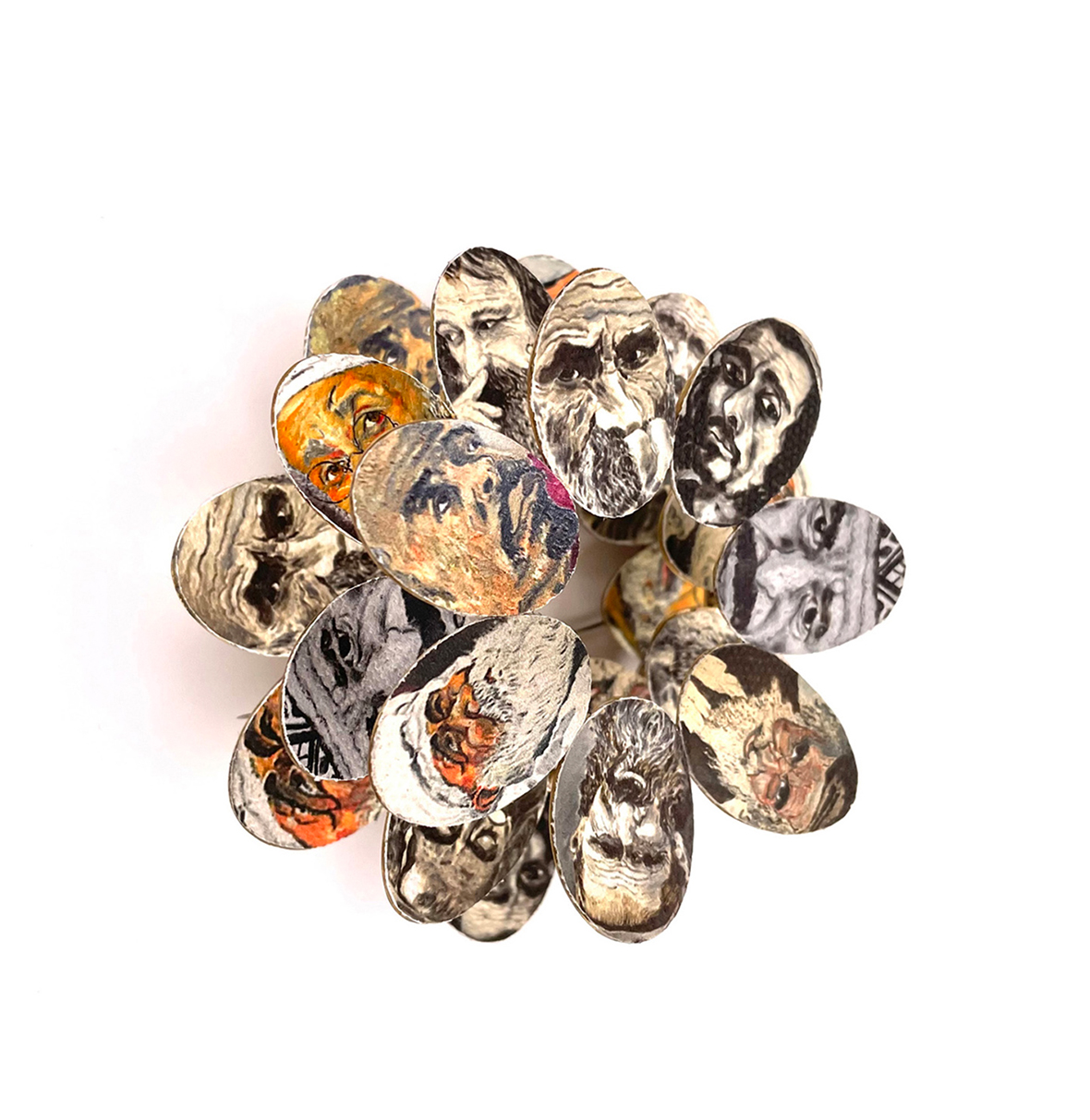


©Omri Goren
flower
brooch
brass and printed canvas
Paolo Gambarelli / IT
Silver and Niello are two alloys known since ancient times.
The search for a contemporary and unconventional technical-expressive language highlights the recurring dichotomy between the ancient and the modern. One possible inspiration can be found in these words by Gustav Mahler: „Tradition is not the worship of ashes, but the preservation of fire.“
Fire, not ashes, is the energy of the present and can appear familiar or new, fascinating, frightening or unpleasant.


Between Ancient and Modern
brooch
silver, niello, steel, calcite
Qianying Zhu / US
My work transforms cultural memory into contemporary form, capturing each fleeting moment.
I reimagine the twelve Chinese zodiac animals not as fixed symbols of the past, but as living characters that grow and change with us.
Each is redesigned with new forms, allowing them to take on unexpected roles and tell stories in my works.
By reshaping their features and expressions, I invite them into contemporary life, carrying traces of history alongside visions of what lies ahead.
Metal fabricating and 3D printing merge in the making process, balancing the warmth of traditional techniques with the precision of digital fabrication.
In this way, each zodiac figure becomes more than an ornament - they become storytellers, companions, and reflections of an ever-changing world.

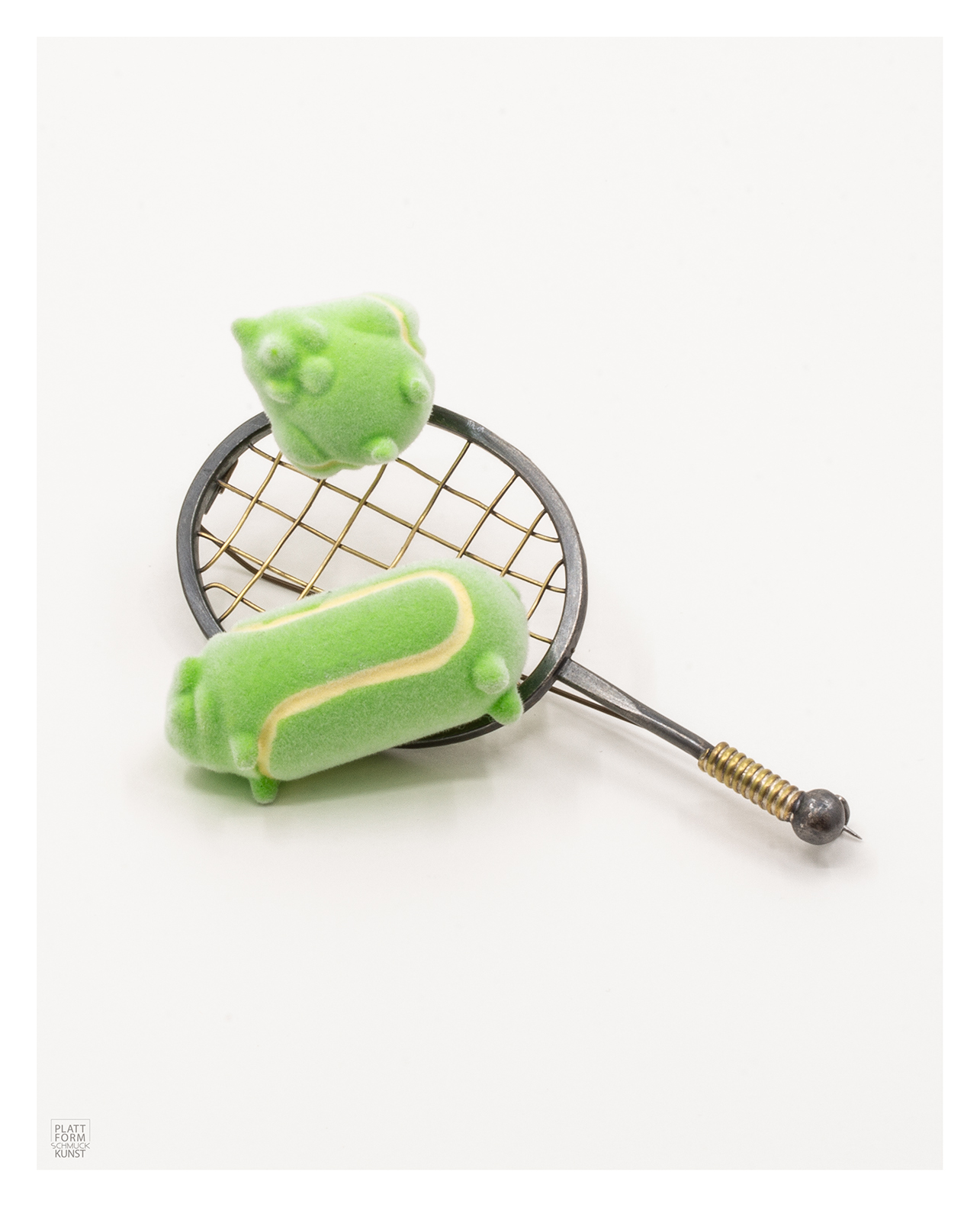


Tennis
brooch
silver 925, brass, flocking, steel wire
Sara Marzialetti / BEL
The malocchio (“evil eye”) is an ancient Italian notion, believed to cause misfortune or illness (headache, anxiety, nausea) through envious or admiring glances.
To remove it, elderly women perform the oil-and-water rite: a bowl of water is blessed with secret prayers, then three, five, and seven drops of olive oil are added.
If the oil spreads, the evil eye is present; if it stays whole, it’s absent.
The ritual is repeated three times, symbolizing the Trinity.
Relief usually follows quickly.
The practice is passed down within families, taught traditionally on Christmas Eve.
This “strange tradition” inspires my piece, we are all observers and observed, needing to be healed.
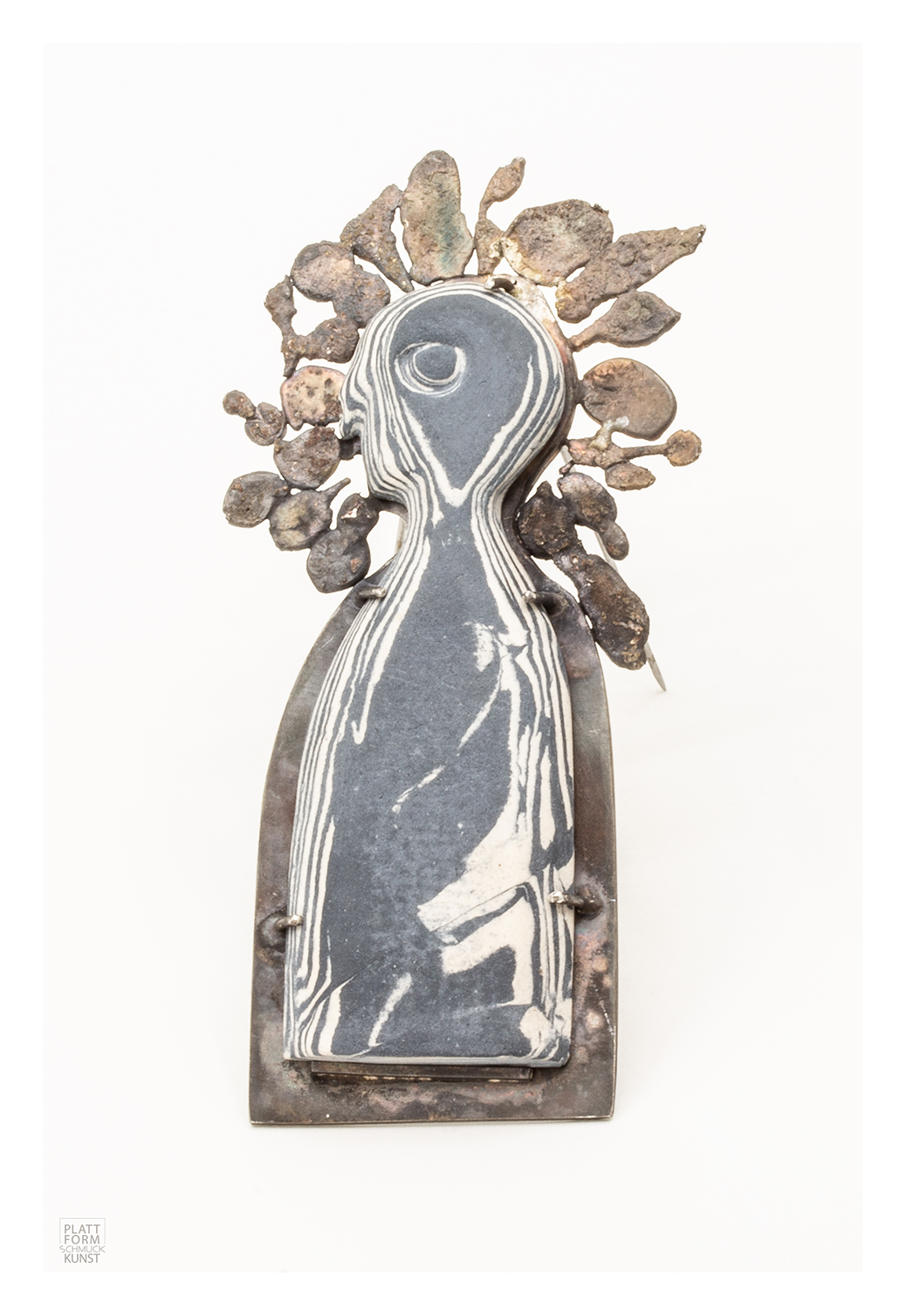
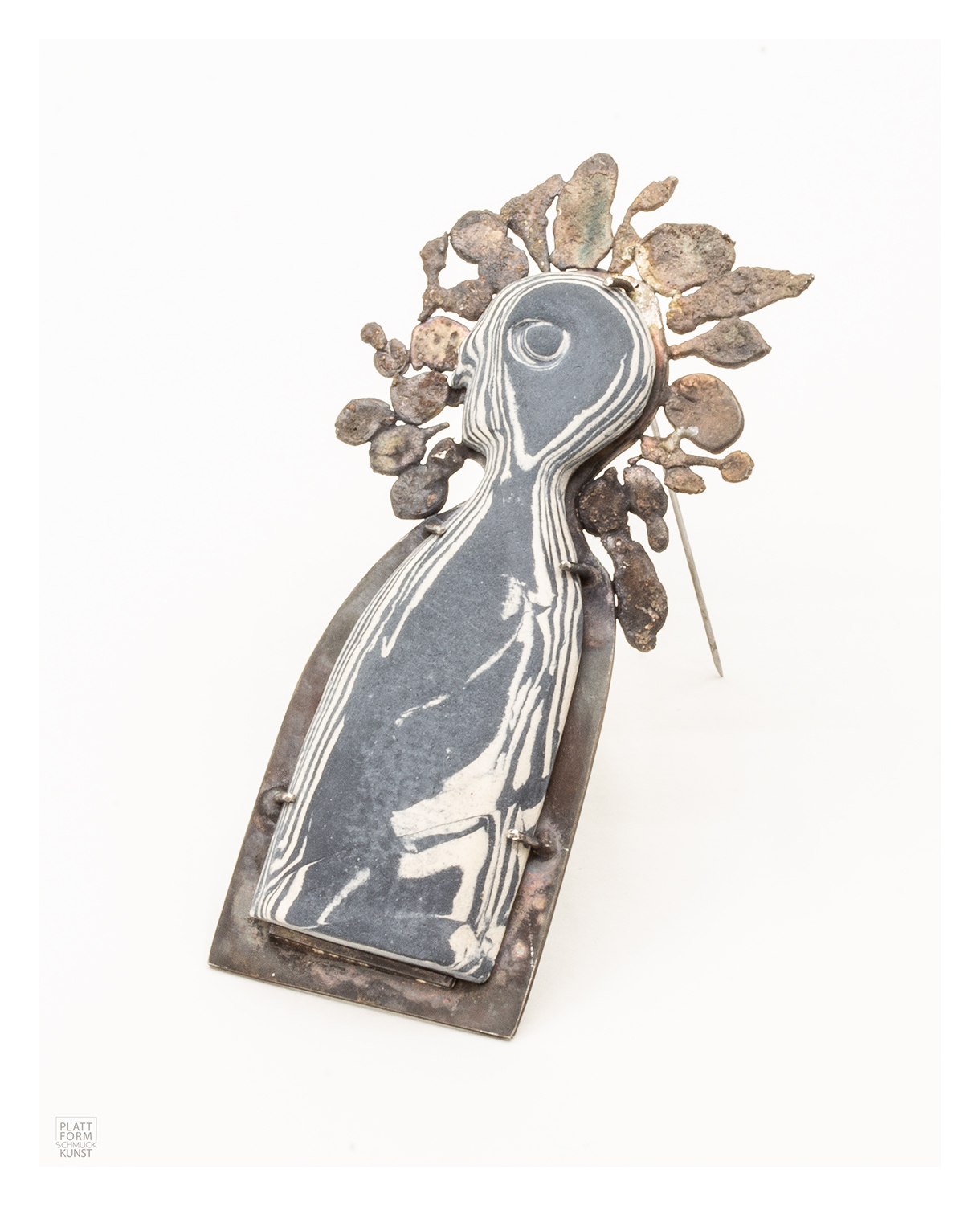


Il Malocchio e l‘Olio Santo (The Evil Eye and the Holy Oil)
brooch
nerikomi in stoneware/gres, silver, steel
Silvie Altschuler / US
Through this work, I aim to celebrate the diversity of traditions while embracing the quirks and curiosities that arise from blending the familiar with the unusual.
This piece serves as a reflection on the richness of individual perspectives, inviting an exploration of the boundaries between art, play, and tradition.
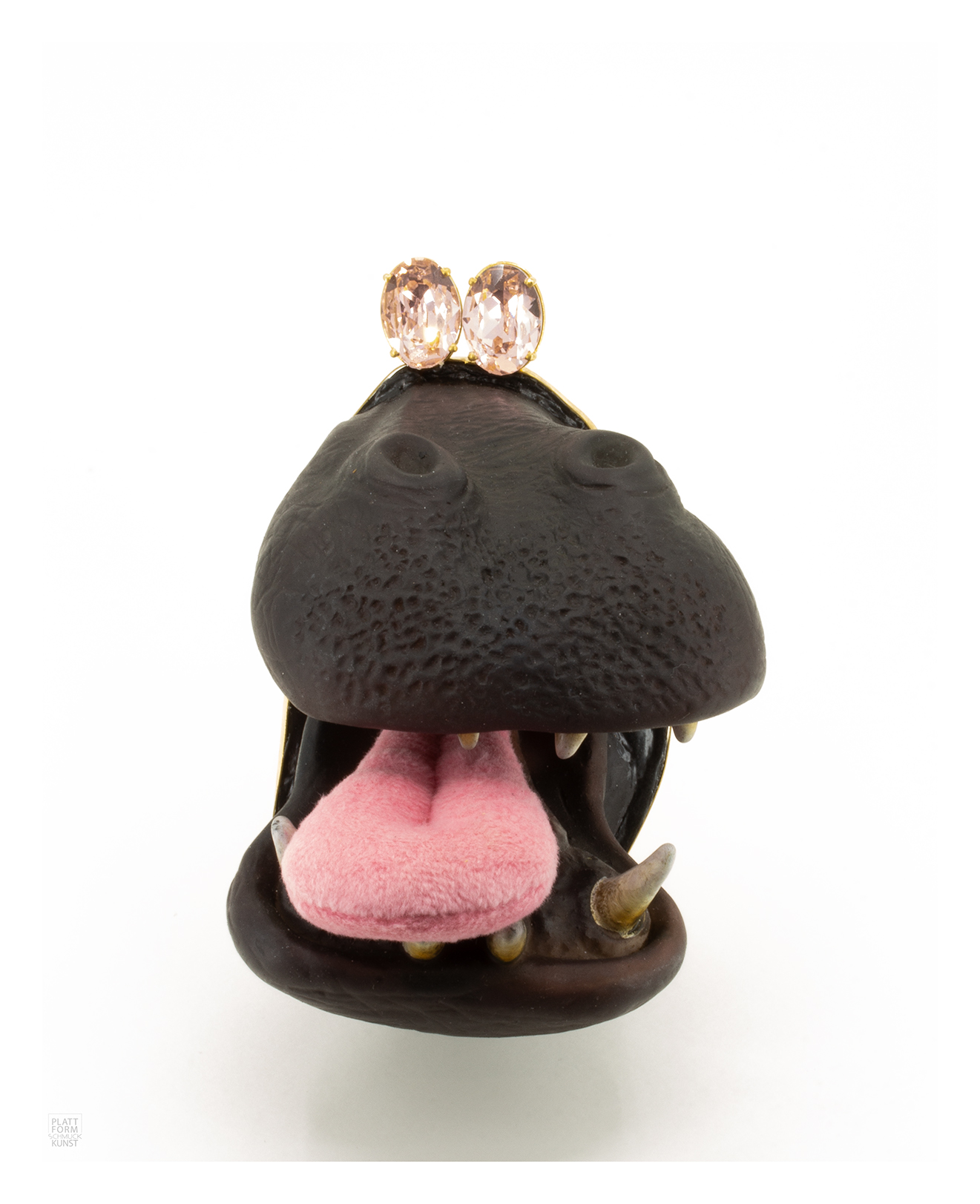
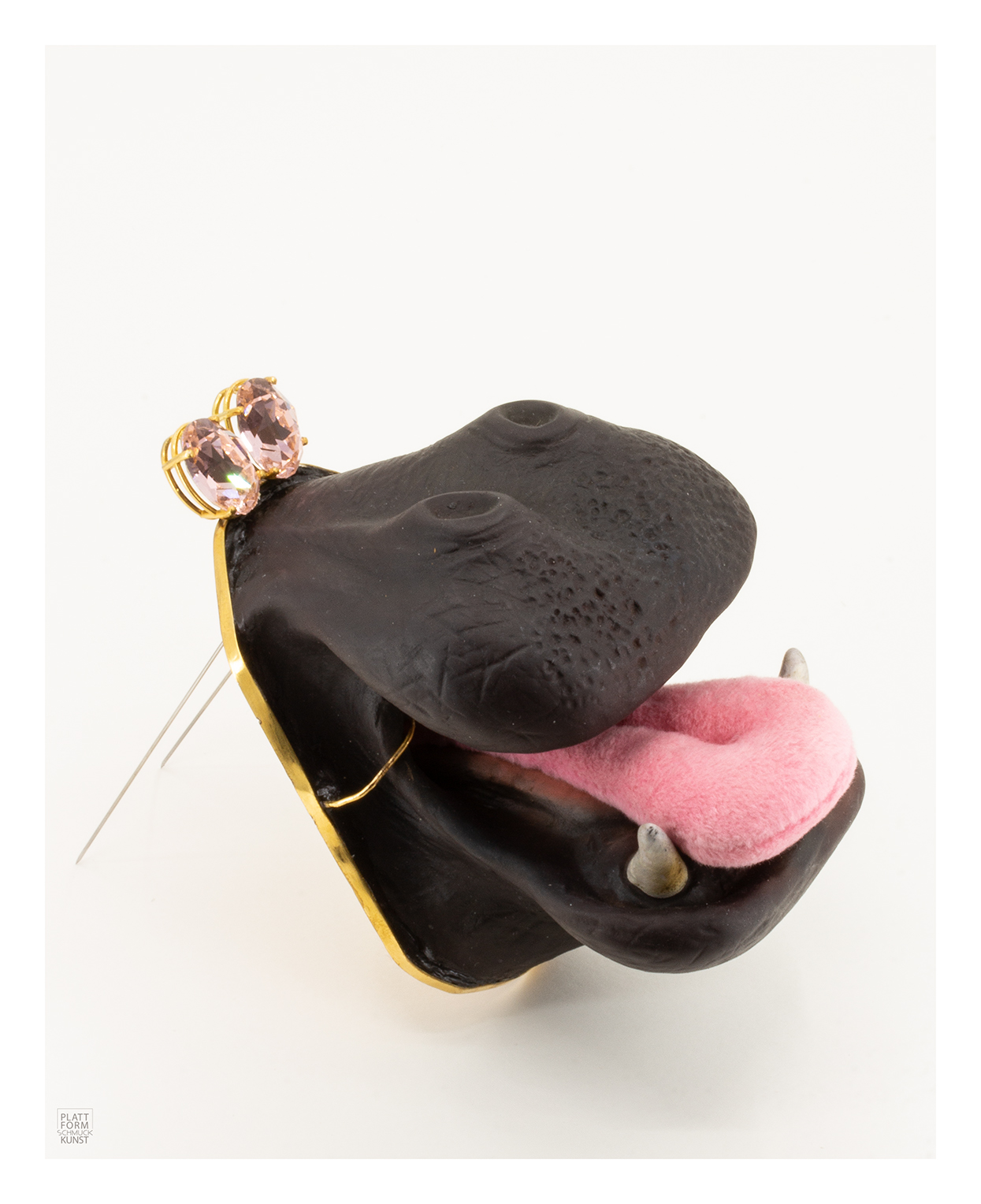


Family Portrait
brooch
gold plated silver, gold filled wire, glass, found plastic, cloth, resin
Stephie Morawetz / AT
Isn’t it strange that the holiday of love is for women a time of pressure and guilt?
Isn’t it strange that we have to prepare a perfect three course dinner but shouldn’t eat it because we’re told to keep our bikini figure?
Isn’t it strange that only if women take care of everything can the holiday be perfect?
And isn’t it strange that we run the whole show but a fat old man gets the credit, as if it were all done by magic?
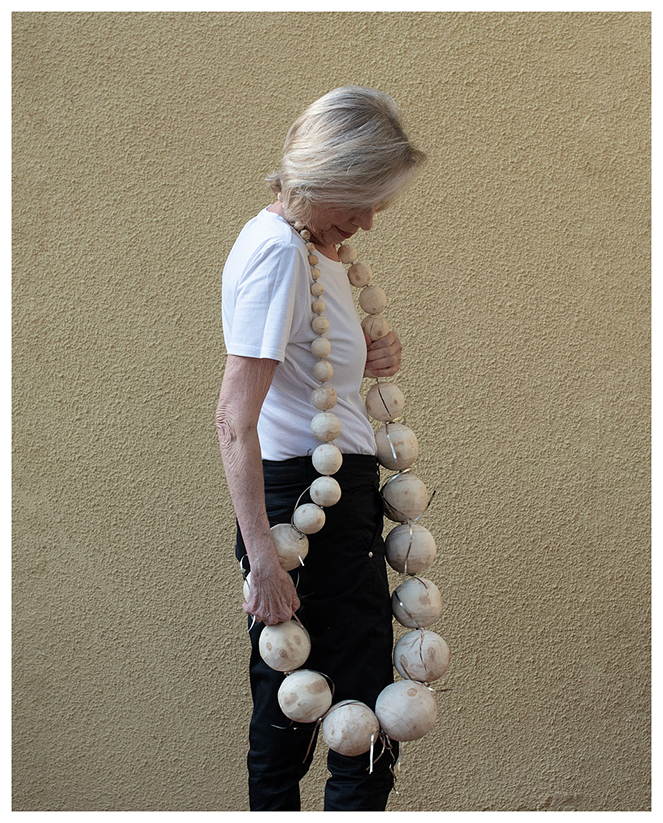


©Stephie Morawetz
The book
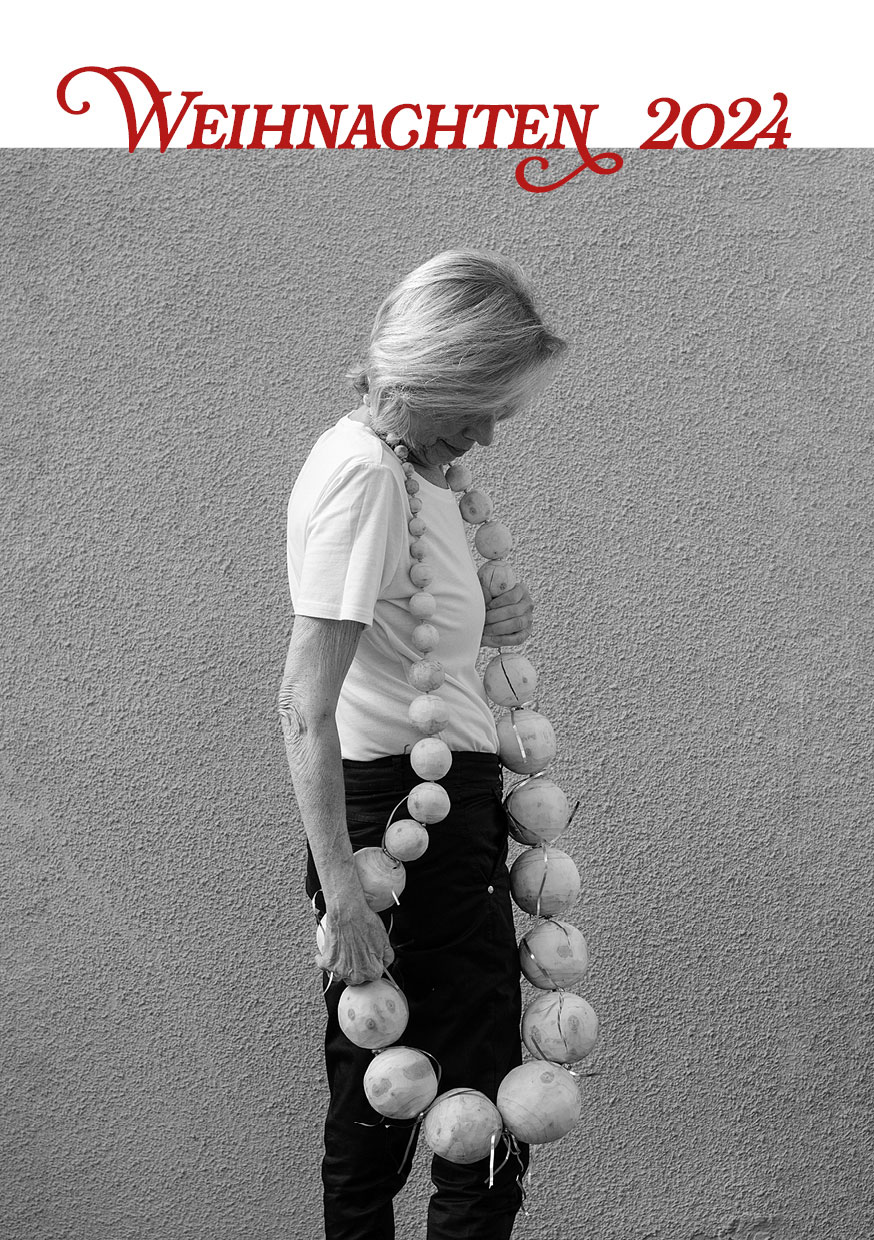
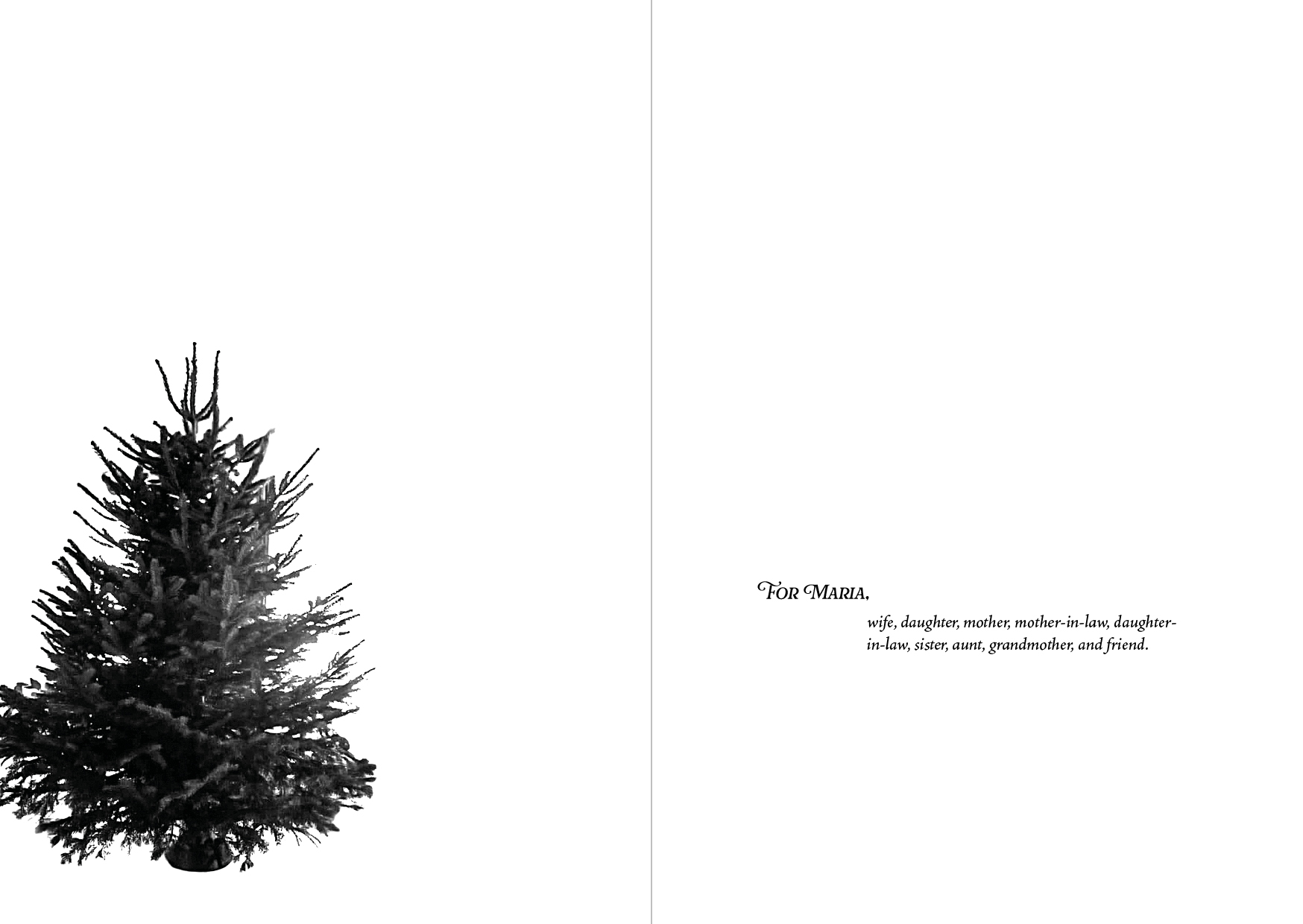
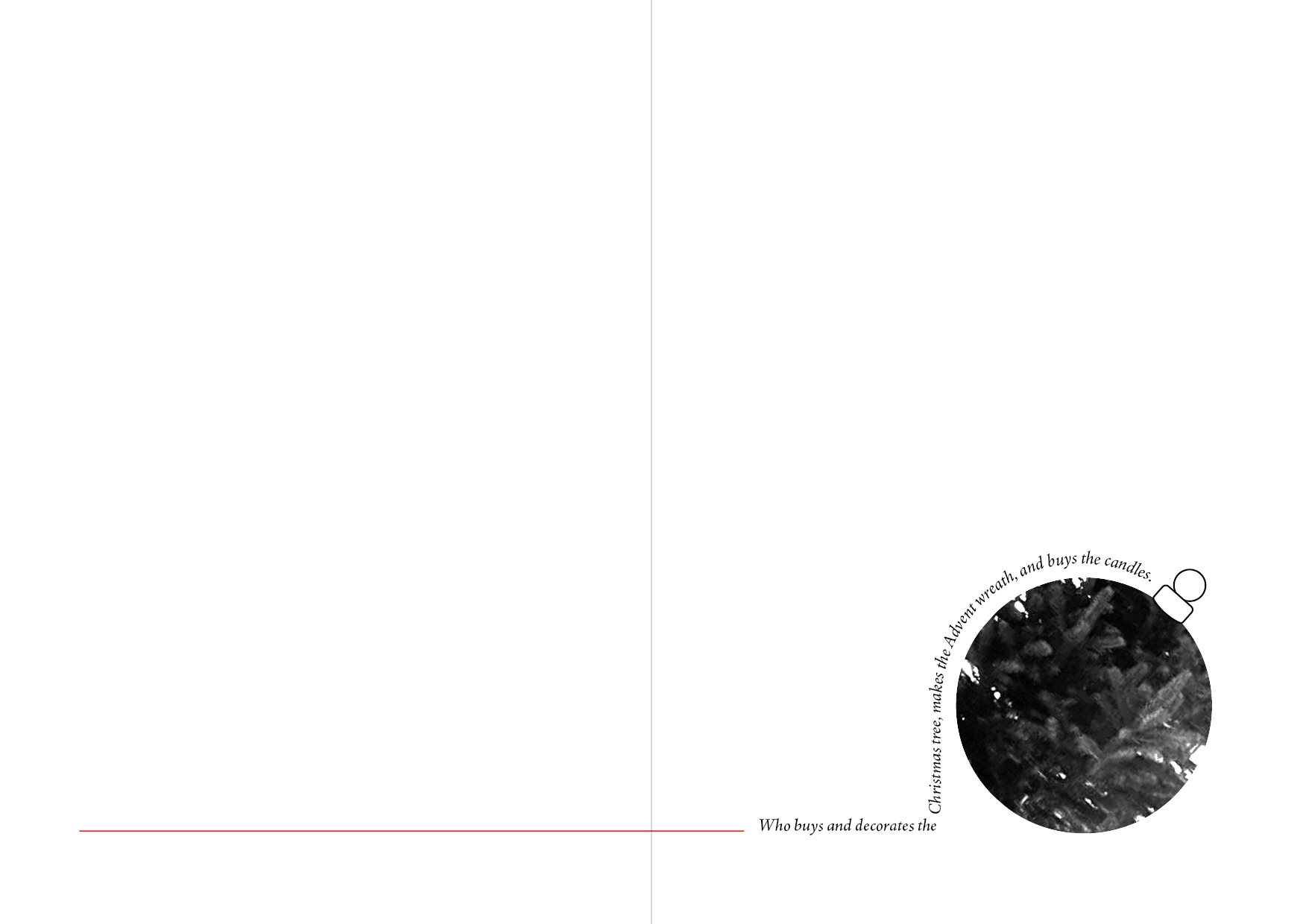
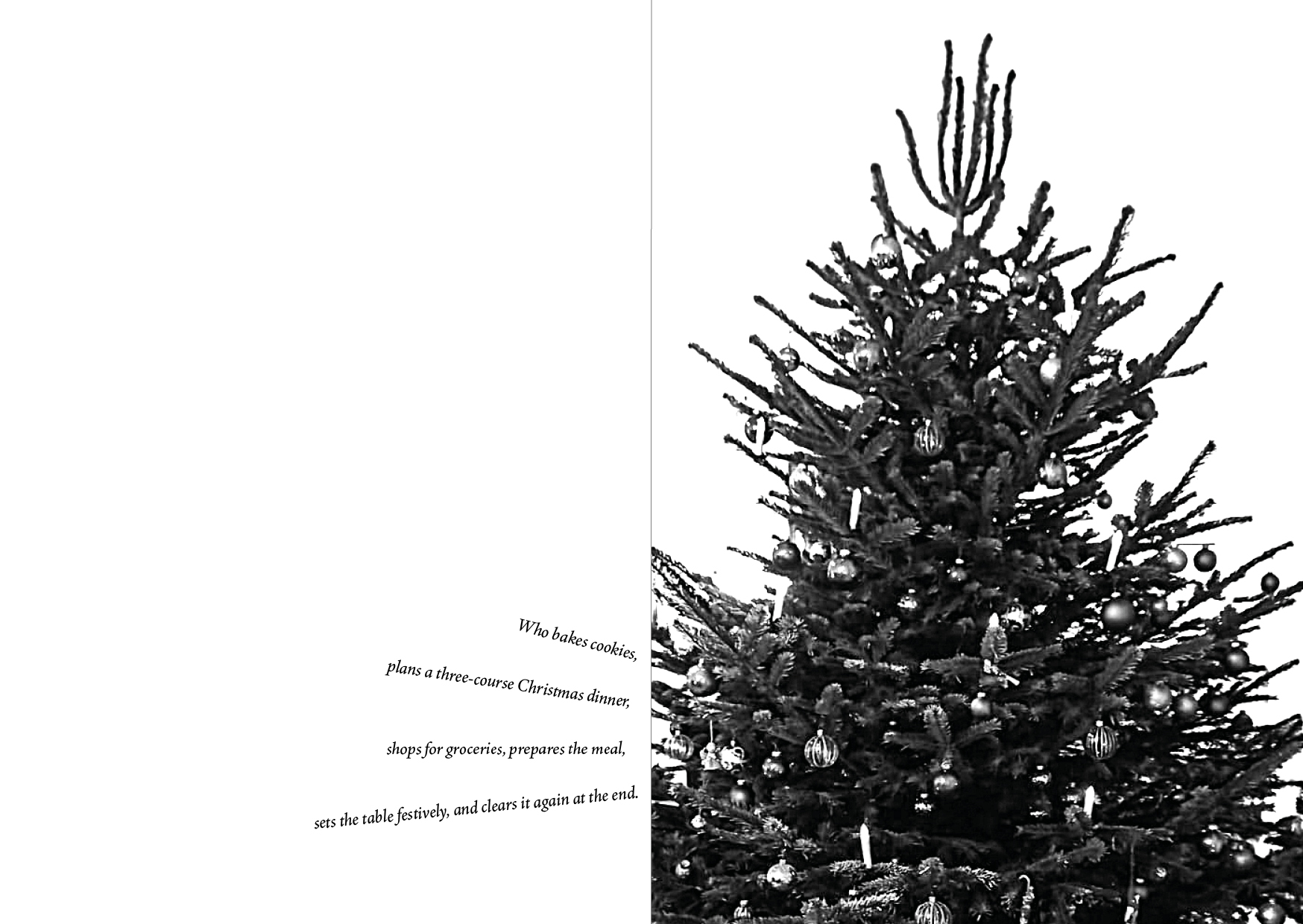
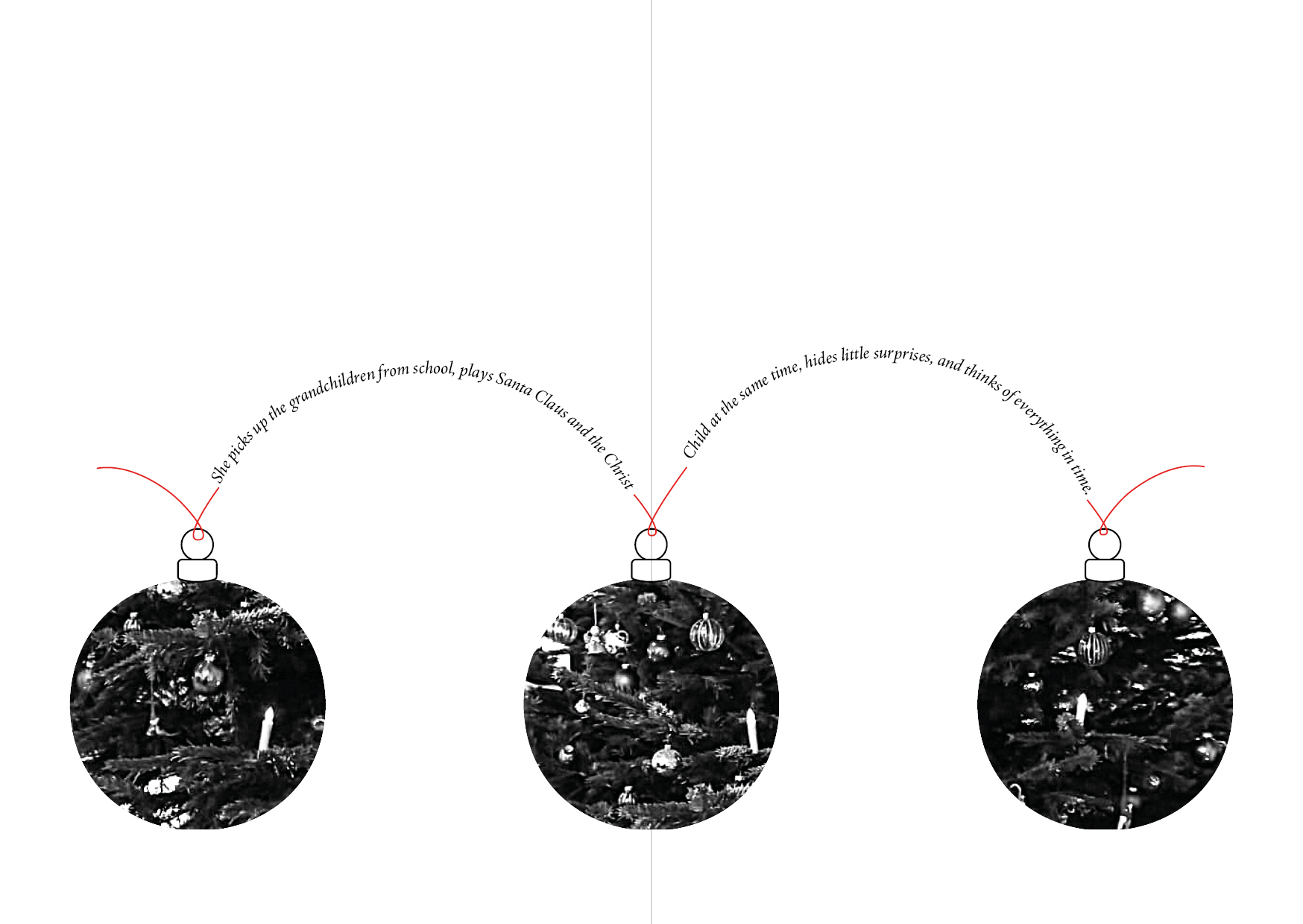


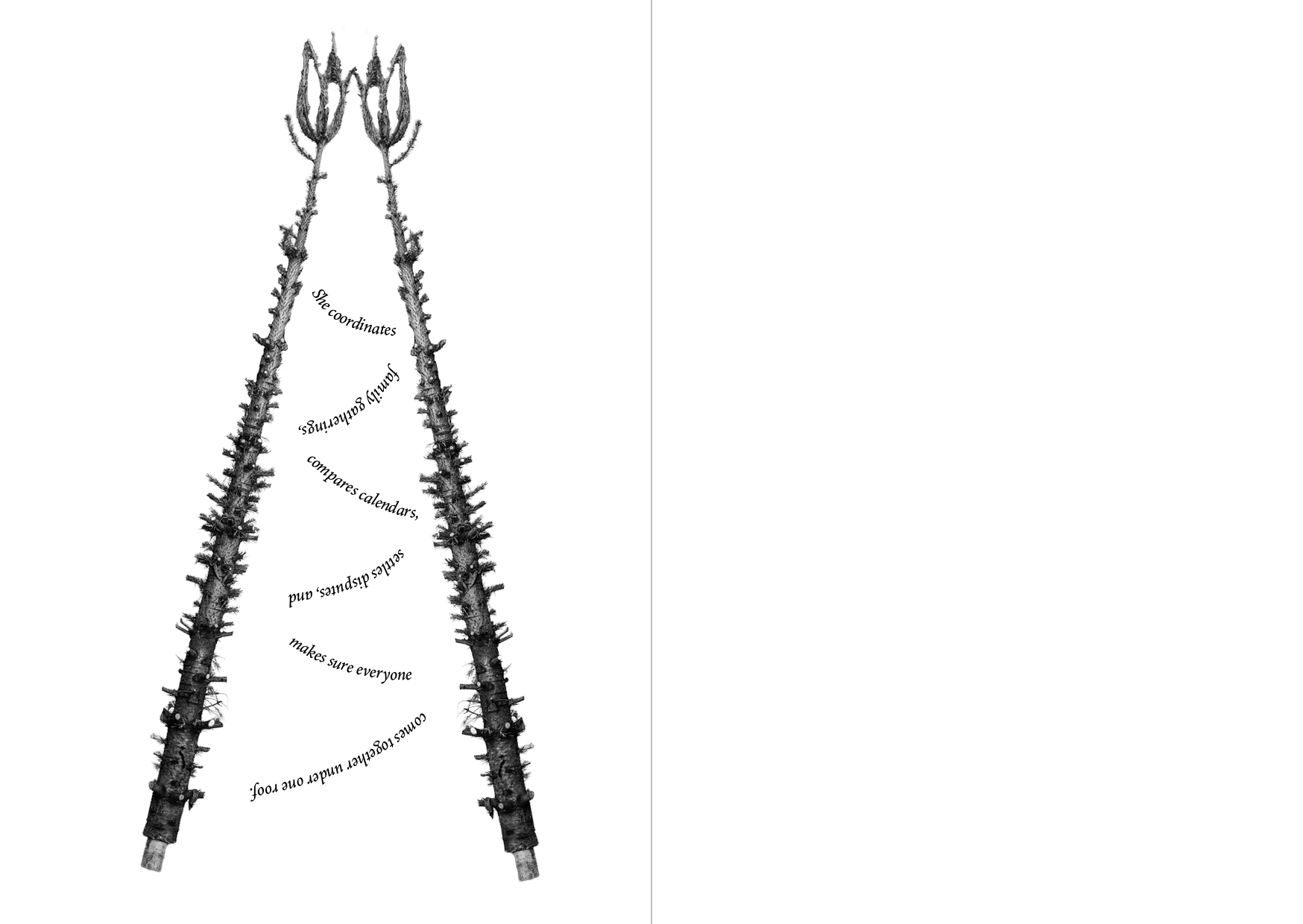

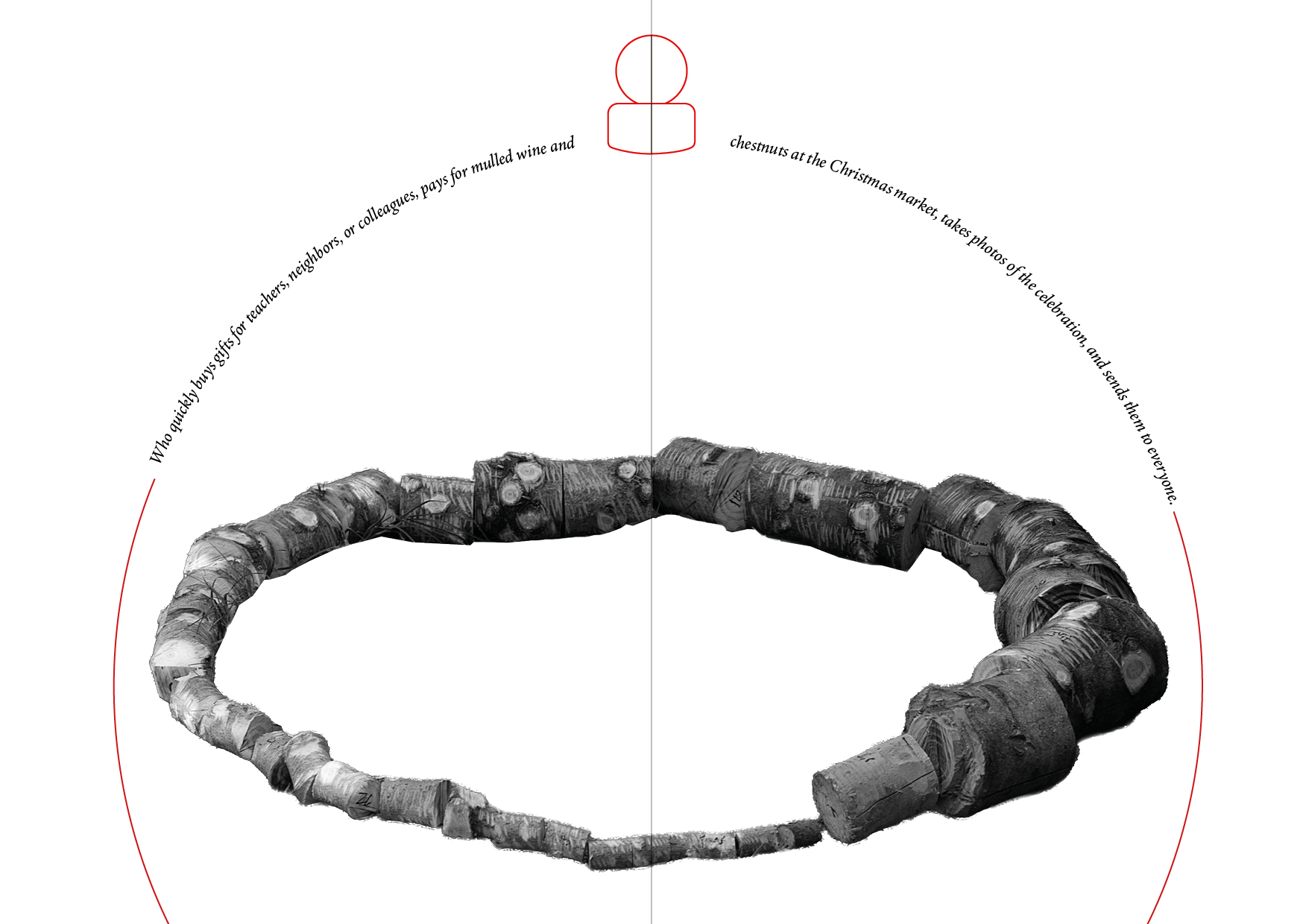


©Stephie Morawetz
Weihnachten 2024
neckjewellery, photo, text
Christmas tree (fir tree), silver, thread
Suyu Chen / US
This piece is inspired by a family member’s trip across Lop Nur in the early 2000s, a dried lake bed known as a no-man’s land in northwest China.
The journey took seven days with no roads, no phone signal, only the desert.
At the last town before entering, they were given a goat, part of an old tradition in that area for safe passage.
For seven days, the goat was kept in the back of their truck, as a companion and a burden.
It`s life quietly counted down with every mile.
When they reached the town on the other side, the ritual ended: the goat was killed for food.
The piece carries that story, showing a mix of sacrifice and survival.
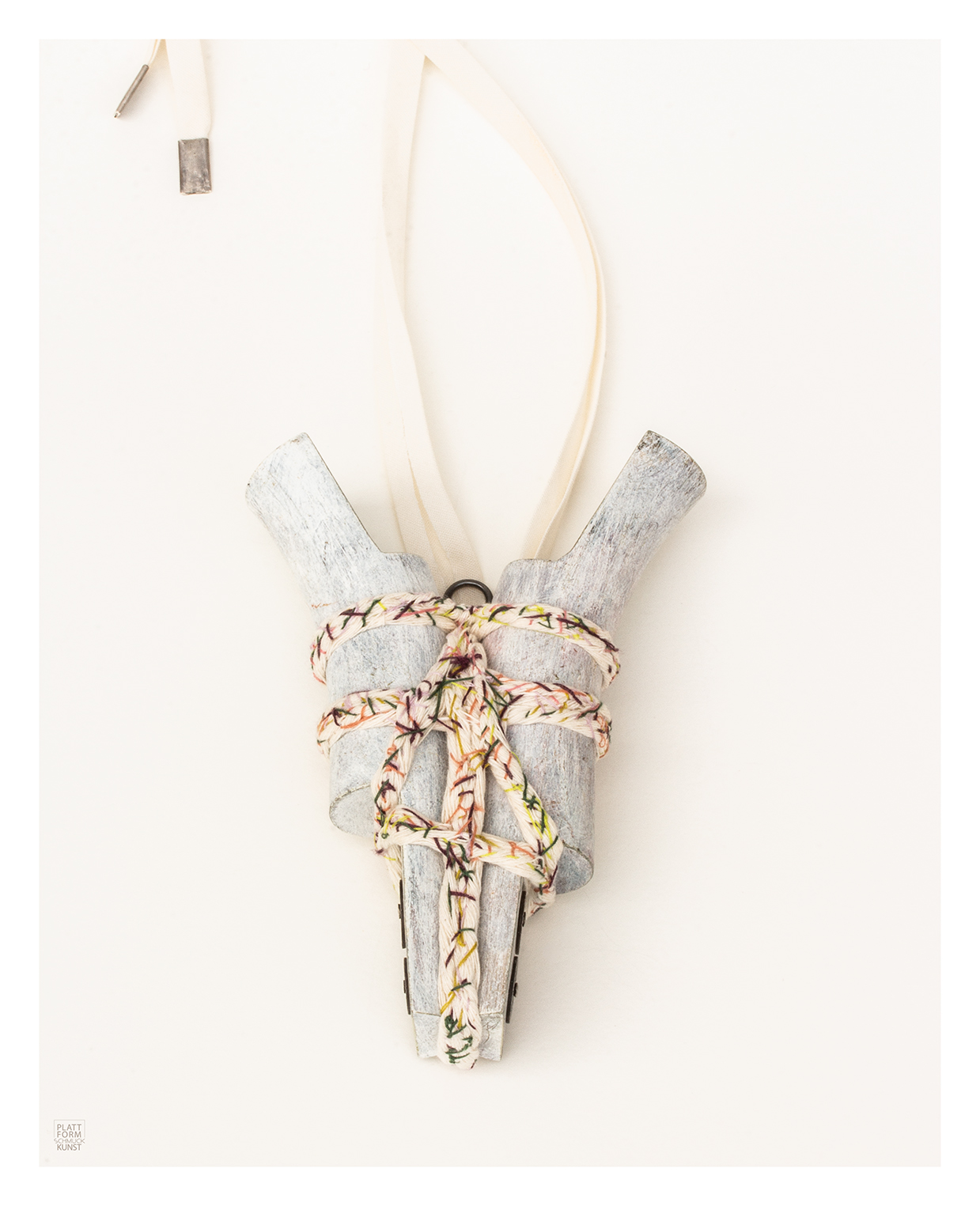
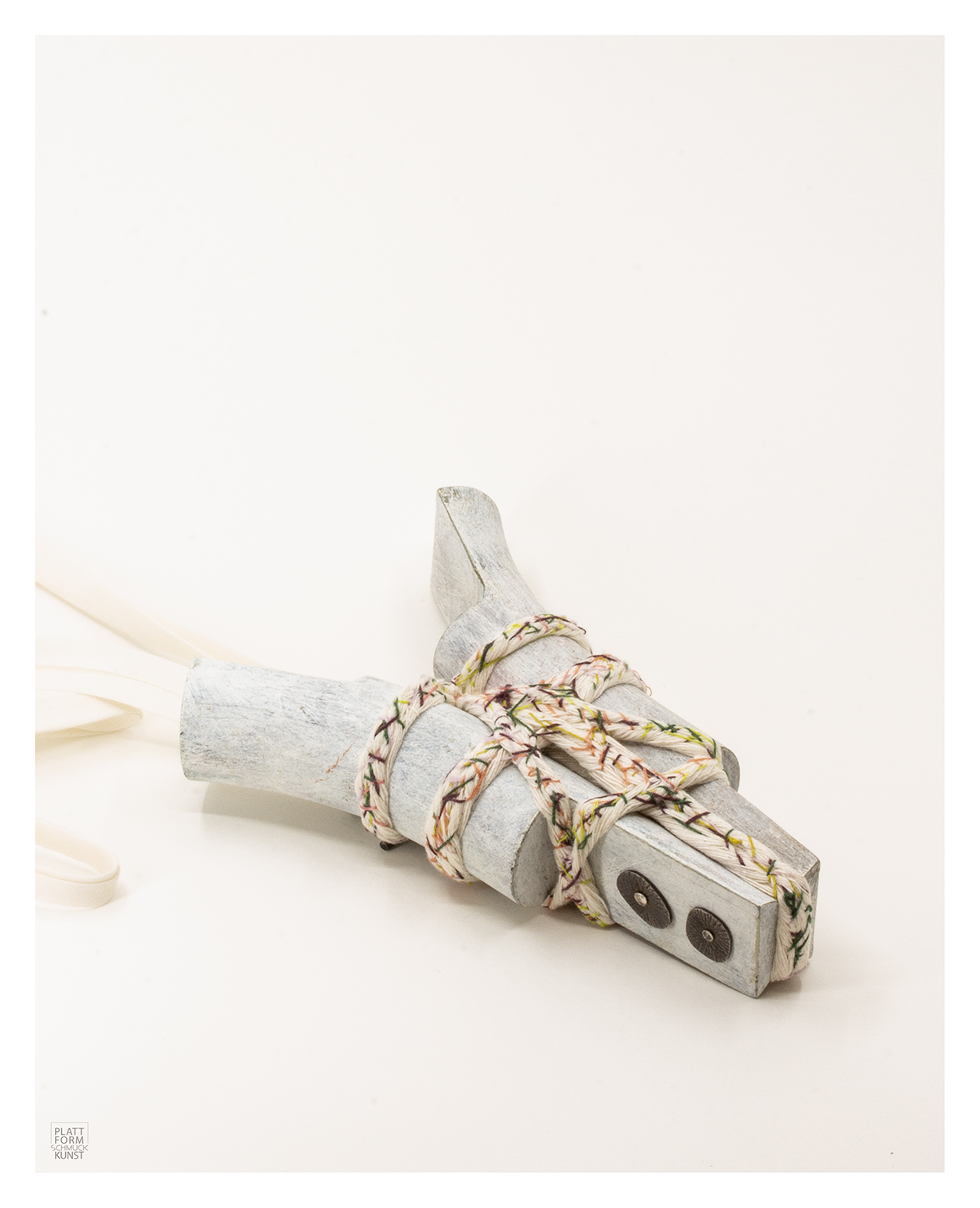


The Goat
neckjewellery/pendant
PVC pipe, resin, silver 925, acrylic paints, cotton, silk thread
Ziqi Yuan / US
In China, we believe that burning can transfer objects from the living world to the afterlife for our departed loved ones.
At funerals, we burn spirit money, red candles, and incense as offerings—sending them currency to use in the other world while expressing our remembrance and wishes.
We also believe that words carried in incense smoke can reach the deceased.
In this work, I used incense to inscribe final words on spirit paper.
As the incense burned through each sheet, the traces grew fainter, my words fading away like the last breath of the departed.
I used a rock from my hometown to carry the shape of my words. In this work I wish to honor the memory of my departed loved ones.
As everything gradually fades, and one day I may no longer recall their faces, love still remains.
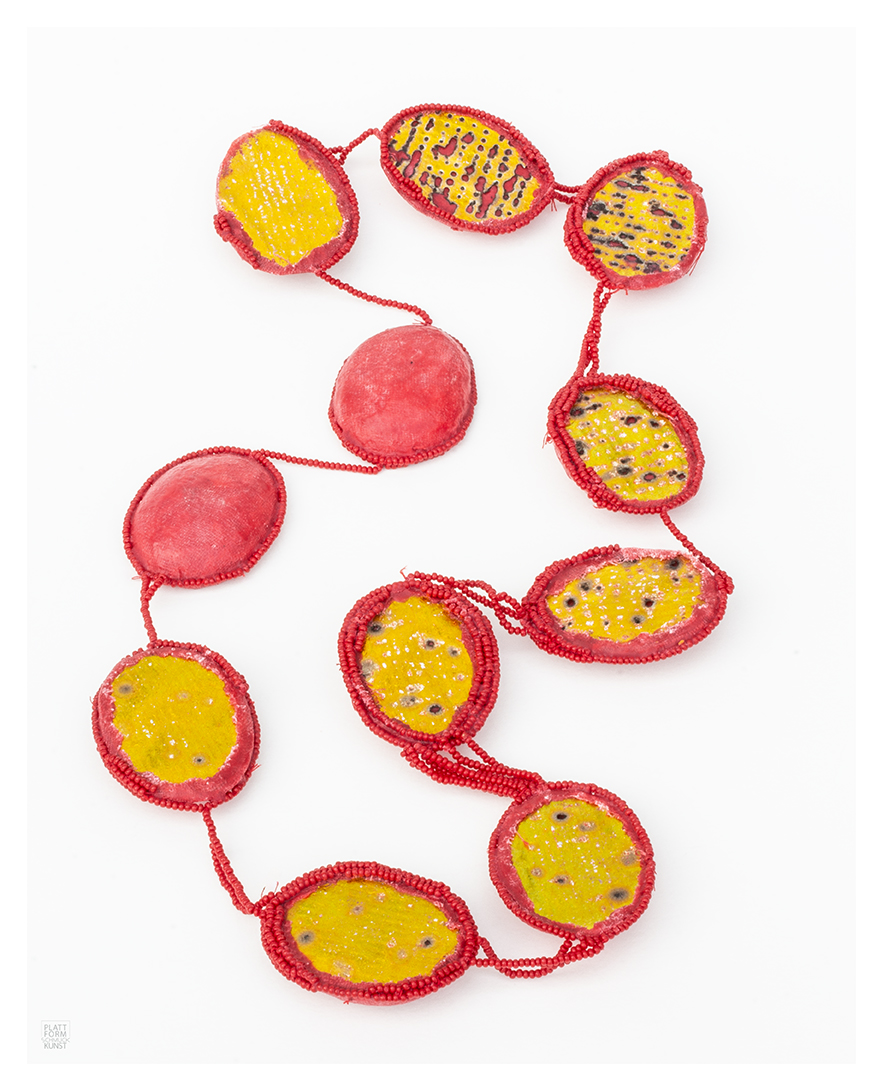
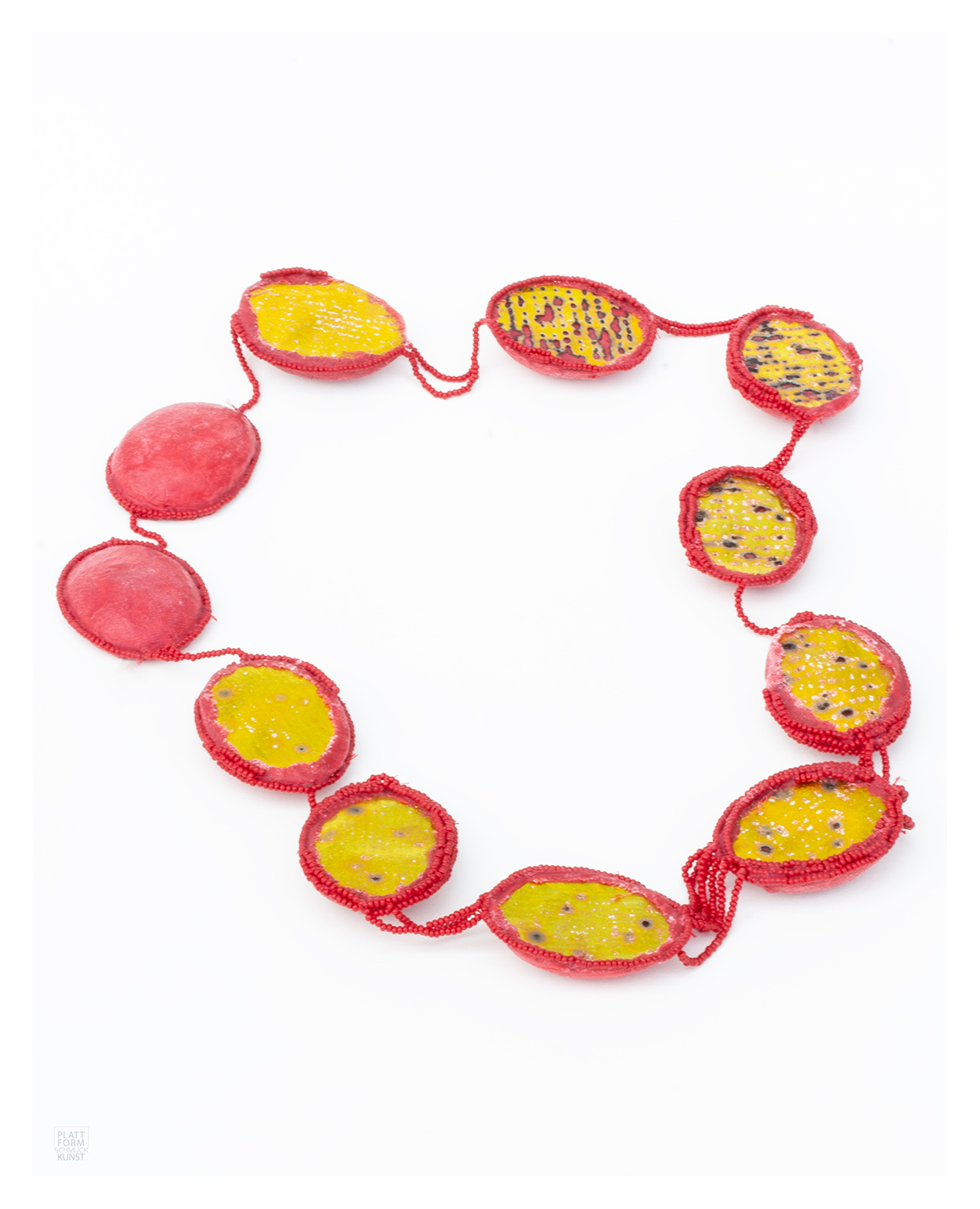
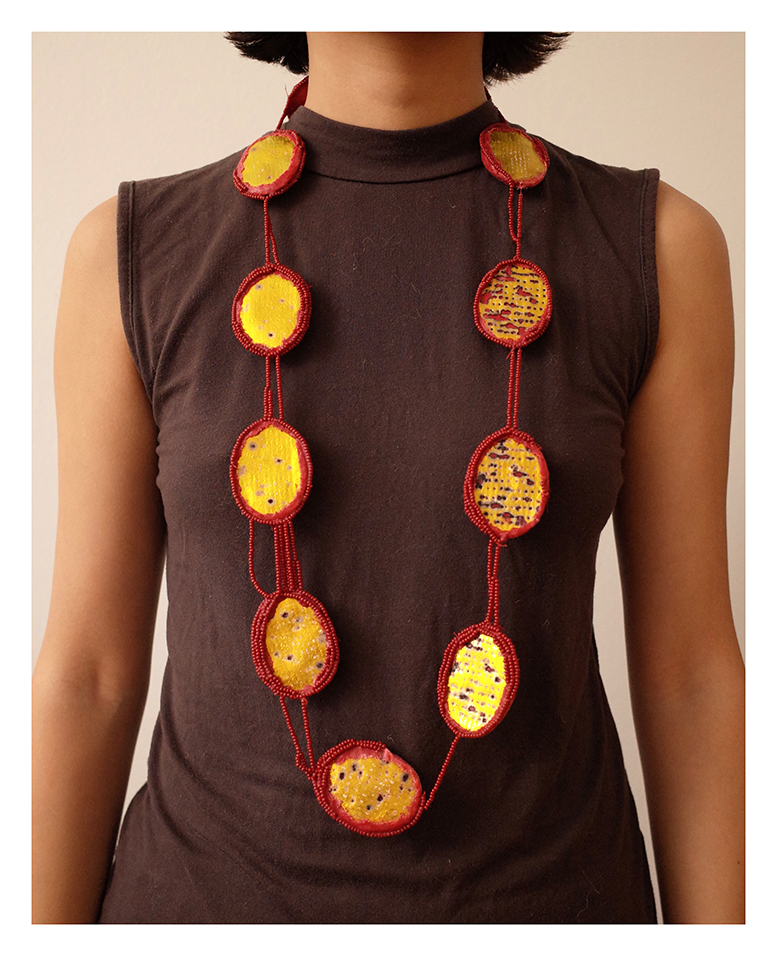


Last Words
neckjewellery
wax, plastic beads, cotton, Chinese spirit money

Sponsored by